The Fat Ewe Farm and Bed and Breakfast
The Fat Ewe Farm and Moose Hills Inn
Organic Permaculture Farmin' for
the Lazy Ewes
  • The Fat Ewe Farm
  • About Us
  • Blog
  • The Fat Ewe Farm Store
  • Livestock Breeds (click here to see all the breeds)
    • Angora goats
    • Icelandic Sheep
    • Jacob sheep
    • Old English Southdown Babydoll Sheep >
      • Babydoll Sheep on the Fat Ewe Farm
  • Contact Us
    • Photo Gallery (click here for some awesome photos or watch the slideshow) >
      • Video Slide Show
    • Phone Number
    • Map
  • Sale Barn
  • Recipes From the Fat Ewe
    • Old Stuff
  • How Much Meat Do You Get?
  • Ukrainian Easter Eggs
  • Moose Hills Inn

OMG. Rabbit and Babies and Death

9/9/2014

0 Comments

 
Picture
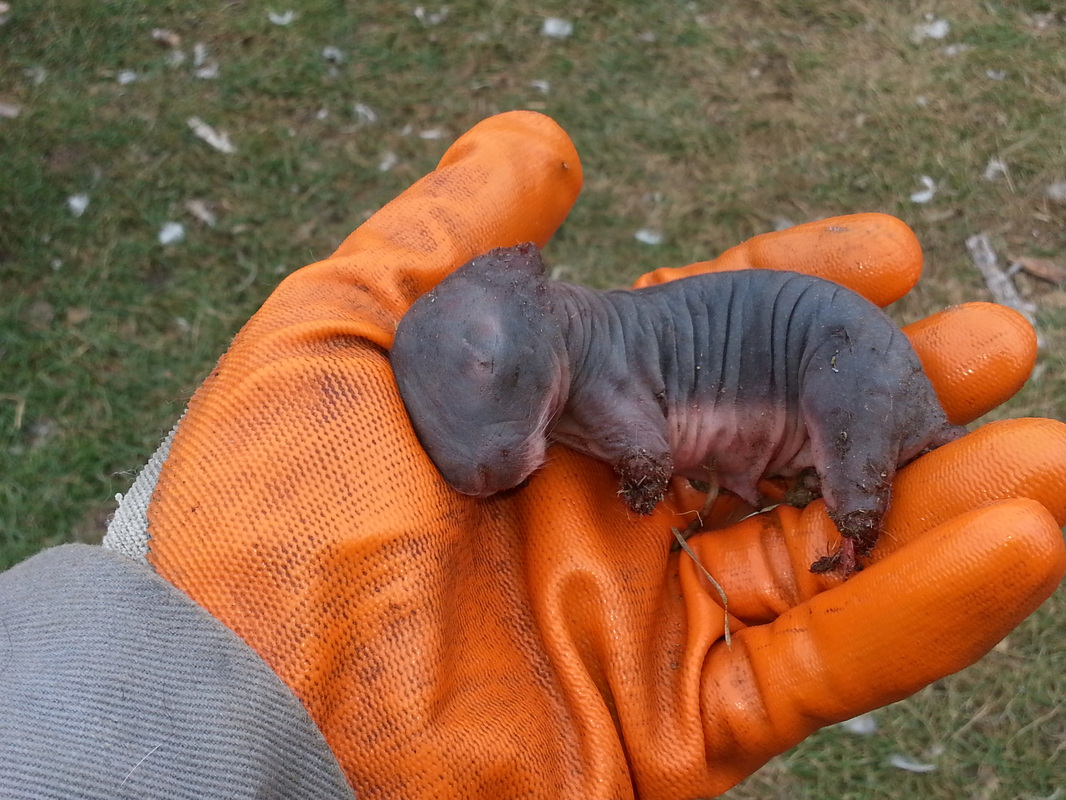
this little rabbit kit was eaten by the chickens. How it got dragged out of the kennel is a mystery. I am thinking it must have been close enough to the edge that a chicken could have snatched it.
Picture
There is so much to learn and too many conflicting opinions about keeping animals. Everyone does things their way and some believe it is the only way, there is no other and certainly none better. Keeping rabbits is that way. There are a few who believe rabbits are best kept in colonies, while others separate and raise them in cages. Raising them in cages is not any different than keeping hens in cages in my mind. The rabbits in a rabbitry are stacked in cages, droppings falling to the floor, not always kept free of manure, but it does not stink because rabbits manure is not too bad and if there is enough organic matter, it can be managed. But the rabbits do not see the sun if they are kept in a cage in a building. So I chose the colony method. 

The buck and two does cohabited for the last month. The does were pregnant and grouchy yesterday and the buck was hiding. I figured it was time. Sure enough this morning, there was chaos in the farm yard. Something was being eaten, but it was already dead. What was it? Oh no, a baby rabbit, but how in Earth did it get outside the kennel? 

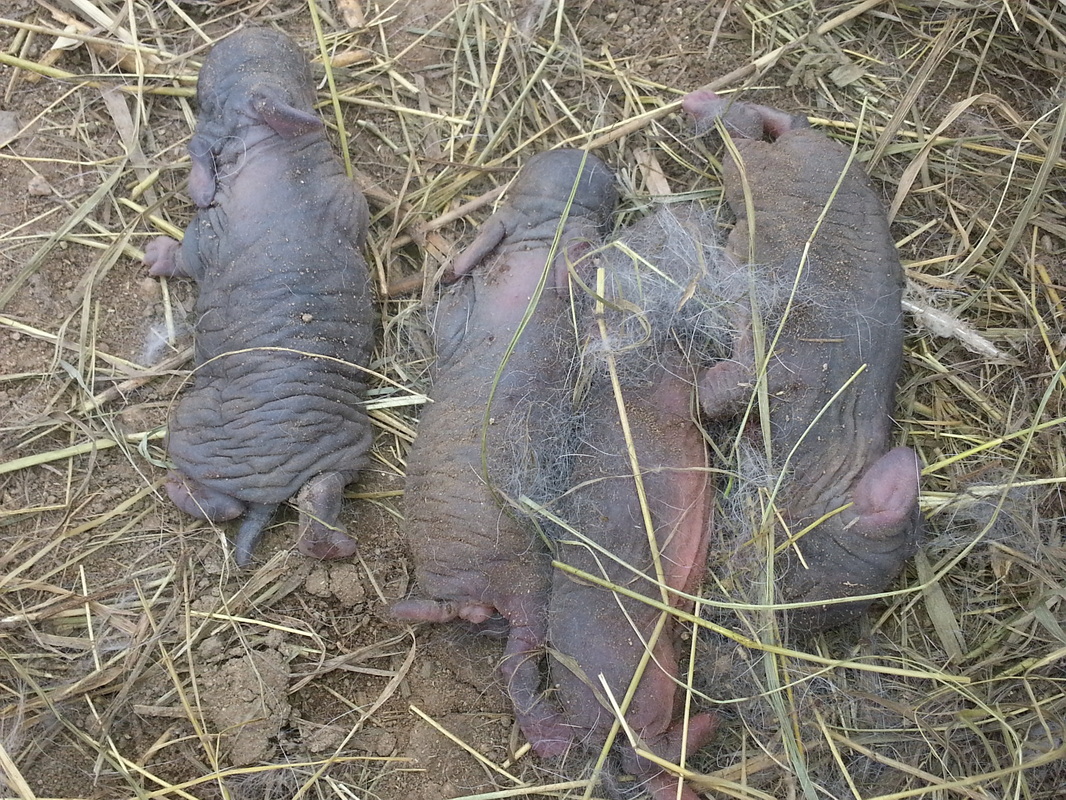
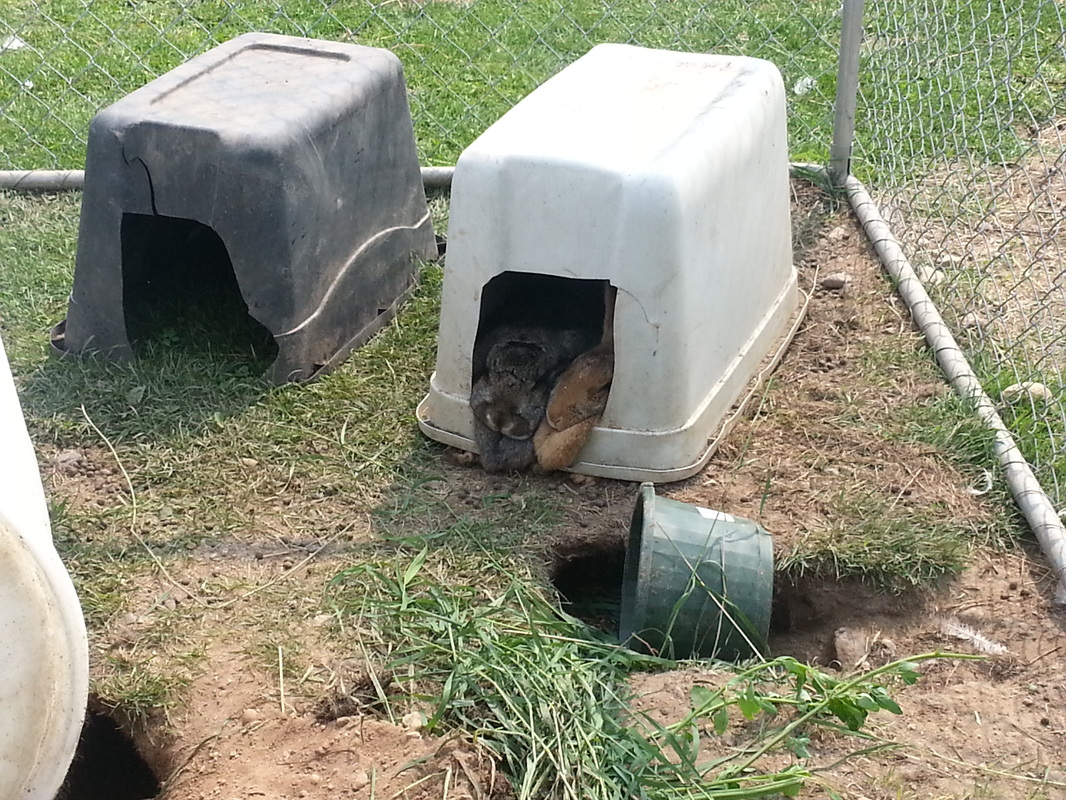
So, I went to investigate. The buck is still hiding, so I just took him out and put him in a large cage for now. He has a tote to go in if it rains and if he is cold, so he will be fine for a while. The does are fighting though. There is only one burrow and two nesting boxes, but there are no nests in the nesting boxes. Instead there is a burrow, a long tunnel that turns rapidly and likely has a chamber. It appeared that the first doe had her kits there, 6 that I could find, and the other doe dragged the entire nest out of the burrow to have her kits there. The first doe is hiding in a nesting box and the second doe is busy covering the entrance to the burrow, which they do in the wild to make it appear that no babies are there. She used dirt and hay and did a remarkable job. 

But the poor doe whose babies were dragged out, then died, is sad and hiding. I need to put her in a separate cage too. So, it appears the colony thing is not feasible for these three rabbits. Tomorrow I will take Cindy Lop Ear out and leave Sandy Flemish Giant in. Hopefully the babies will be fine until then. This is terrible and a real wake up call on rearing rabbits. 6 babies sacrificed to ignorance is not acceptable. Caging rabbits is also not acceptable. I think unit they are pregnant they can live together, but cohabitation must cease once the buck has been home for a week to prevent further baby deaths. So sad. I am deeply sorry for the loss of these little lives. Please forgive me mother rabbit and babies. 
0 Comments

Raising Rabbits

7/20/2014

0 Comments

 
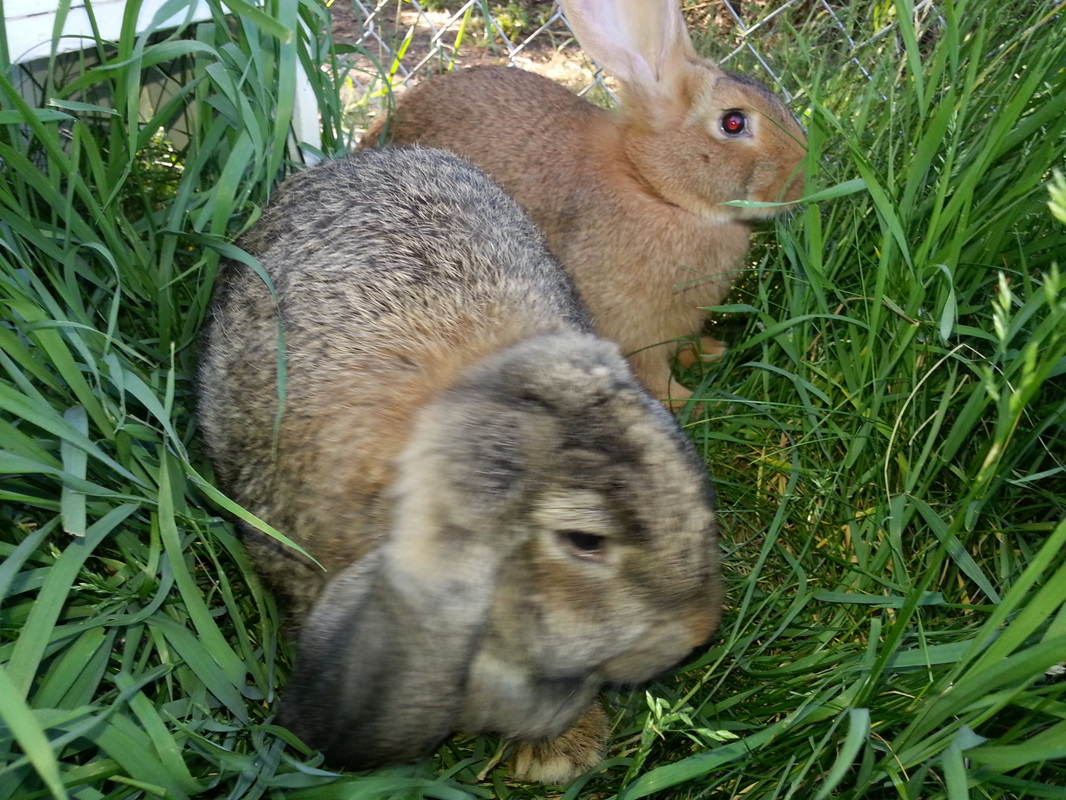
Rabbits are newer to the farm than the other critters, having only arrived last year. I could have bred the does last year, but was not ready in my mind to eat baby bunnies. Rabbit meat is delicious and lean, and the rabbits are excellent feed converters, but feeding them when they are in cages is not easy. I pick some weeds and grass for them daily, sometimes twice if it is hot, and they pick at it, but do not eat much. They do like some leaves from saplings and will eat grain, but they love rabbit pellets. I did not want to feed pellets to them because the ingredients are made from genetially modified corn and soy and round up ready sprayed grains. Petey got sick though and was did not thrive on the hay ration and grain. He became thin and depressed too. Now he is closer to the girls and can see and smell them. The female rabbits are very good friends, Sandy, the red sandy Flemish Giant and Cindy, the French Lop. They have little houses they can go to, but often share one together and they have a barrel for when the weather is wet and driving, which they do use together as well. 
The does have dug two burrows to have their kits in. Most folks give the rabbits nesting boxes, but when they are outdoor rabbits, what do you do? There isn't room in their barrel for nesting boxes, nor in their little shelters. In the wild, does dig burrows which they then cover loosely. The burrows are quite deep and go down then back up to keep the little ones dry. They pull the soft down from their chests to line the burrow and when they have their kits, they only return once a day to nurse them, uncovering the burrow and then carefully recovering it when they leave. They then stay near by, but rabbits cannot defend themselves very well. They will bite and jump forward using their front legs as claws, plus kick with their strong hind legs, but they really do not have great defences. Staying out of site is best. 

The burrows are ready and the ladies are waiting. They have another week or so before delivery. I have not been able to move their cage because of their burrows. Usually the cage is moved daily to fresh grass and now I have to pick the grass for them. Petey's cage is moved too, but I have never seen him eat the grass even if it is fresh which pokes up through the wire bottom of his cage. 

I would like to look into naturally raising rabbits in colonies using an electric net fence and putting them in pasture. They would need some protection for the arial predators, so I was thinking of using a trampoline and some how fencing it in. The bunnies can dig well, but if they have what hey want and are not too crowded on the inside of the fence, they do not dig much to get out, at least not these two breeds. I will breed them two more times this summer and then let them rest until next spring. Three breedings should provide about 50-60 rabbits for the freezer. The rabbits have to be taken quite a distance to be processed since no abbatoire around here will do rabbits, but then rabbit can be sold from the farm or used at the bed and breakfast. Besides, I do not have the heart to kill a bunny or anything else. Even the chickens go the the processor. 

This will be the first breeding and I will see how that goes and where I can improve and change things to make it better. I want to allow Petey in with the girls for at least the weeks after he has bred them so he is not so lonely, so I will work on a large cage type area for them. In the meantime, stay tuned for bunnies in a week or so. If they are in the burrows though, I actually won't see them for a month. Who does not love baby bunnies?
Picture
0 Comments

A Warm Spring Day

3/17/2014

0 Comments

 
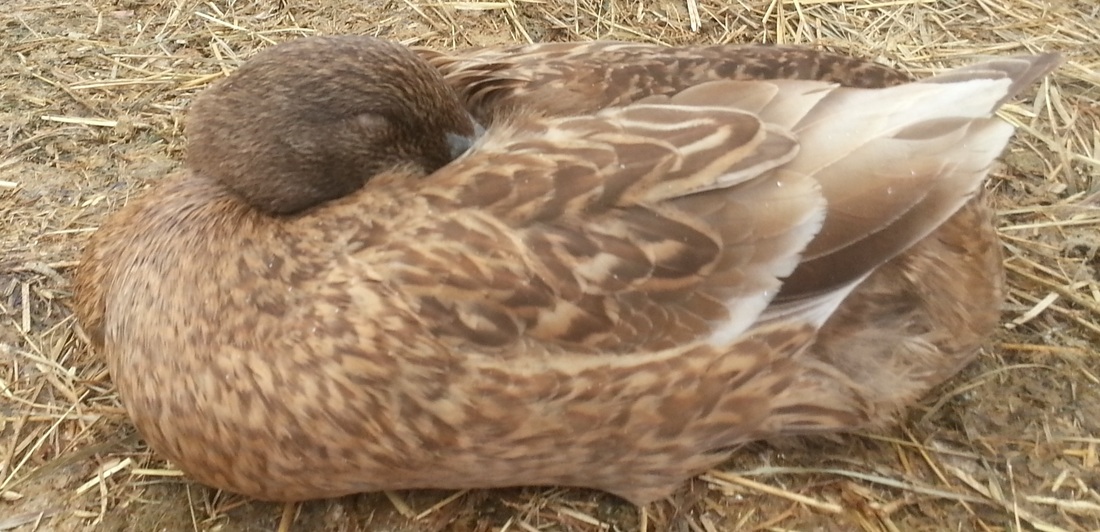
PictureA snoozing Khaki Campbell duck
OK, I know it isn't officially spring, but the days have been so warm, that the snow is rapidly melting. The animals have come alive and are robust and full of joy. The little ewe Jacob, one of Stephen's daughters, jumps with pleasure when she is about to be fed, straight up into the air off all fours and so does her father, though she has never met him. 
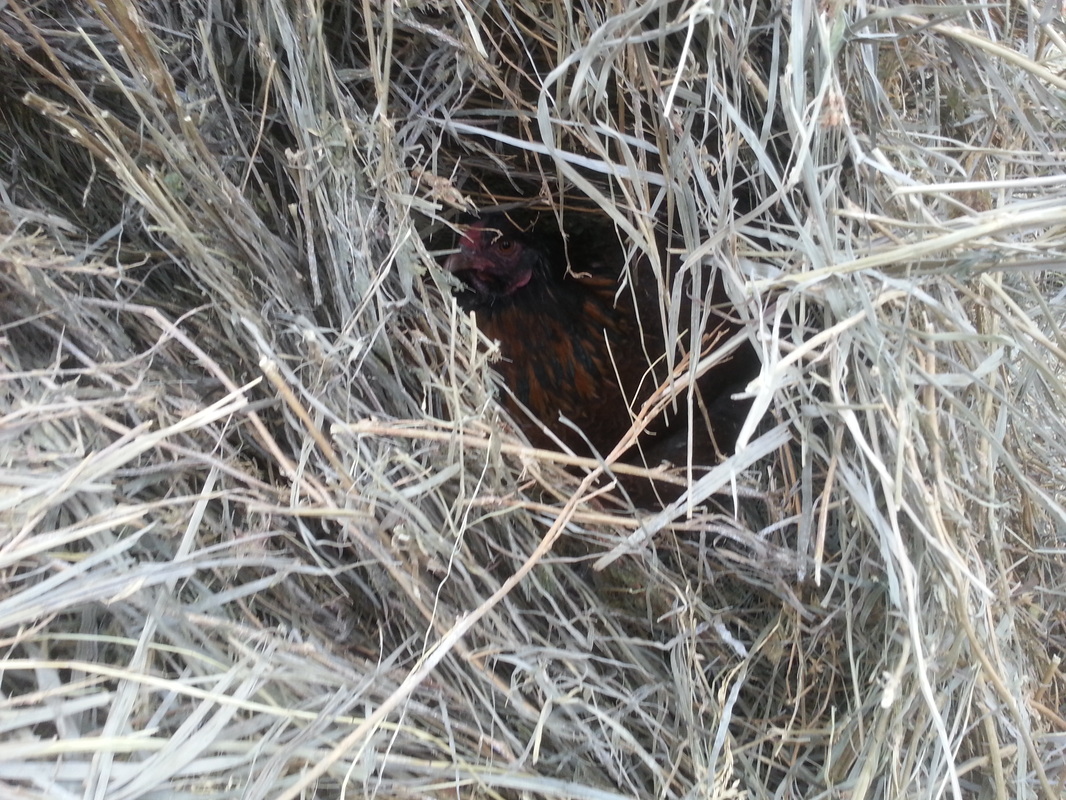
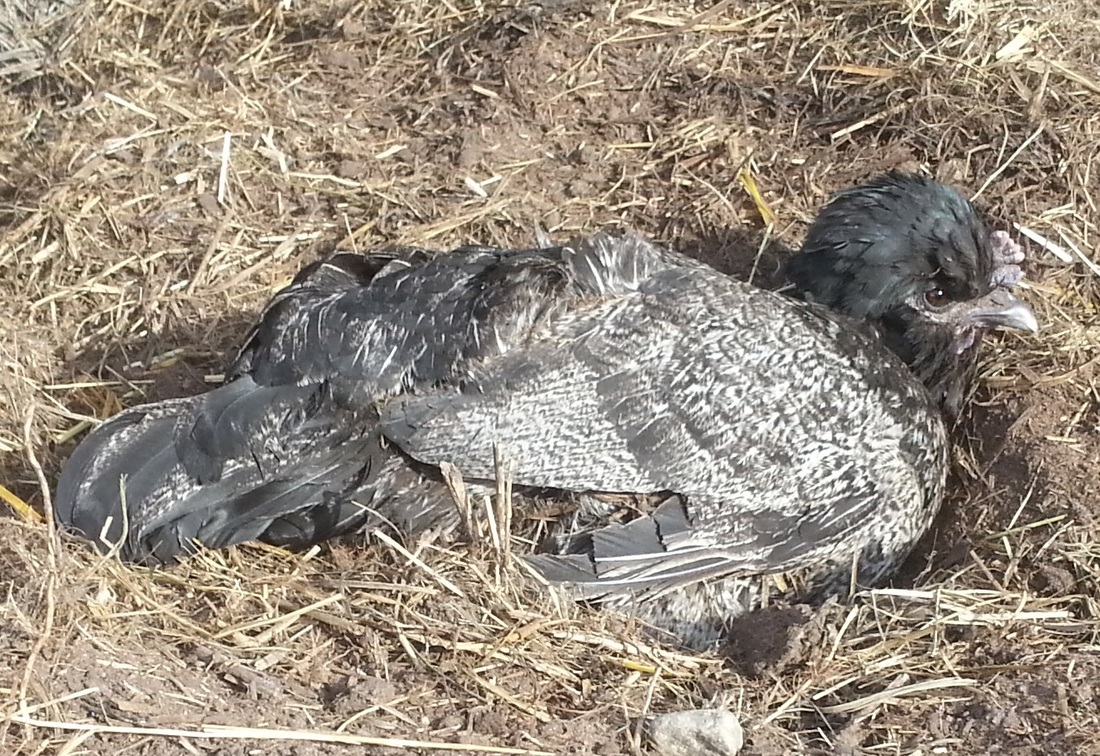
The goats are playful and the ewes are relaxed as their bellies are growing with their little ones. But the ones that are the happiest are the birds. Cooped up all winter in two tiny buildings, only out to eat and drink and then back in to stay warm, they now have the run of the barnyard. The Ameraucanas love to hang out with the adult ewes and are in their pen, eating the Great Pyrenees dog meat and scratching through the sheep manure for worms or eggs or whatever they find there. One little hen found a composting pile with dirt on top, which was fully thawed and she was in Heaven, bathing herself in it. A duck fell asleep, soundly, on a pile of straw, abandoning all cares. Normally the Khaki Campbell ducks are a little flighty and getting close enough for a good picture is not so easy. The geese are searching for nesting areas, so I made three for them today. There are four females and I will have to come up with a fourth nest in the area for her. As a reward for their freedom, the hens laid a dozen eggs today. Thank you my little chickens! The problem with free range chickens, though, is they lay the eggs in strange places, like the straw pile or the hay bales. There were two duck eggs too and soon, it looks like the geese will start to lay as well. The bunnies will visit the buck and there will be little bunnies...oh the fun of spring is wonderful on a warm day. 

Picture
A Partridge Chantecler hen in the hay bale. She left a present of a beautiful egg there.
Picture
The bantam hen, a Silky, Ameraucana cross, bathing in the dirt. Last year she hatched 9 babies near the end of summer.
Picture
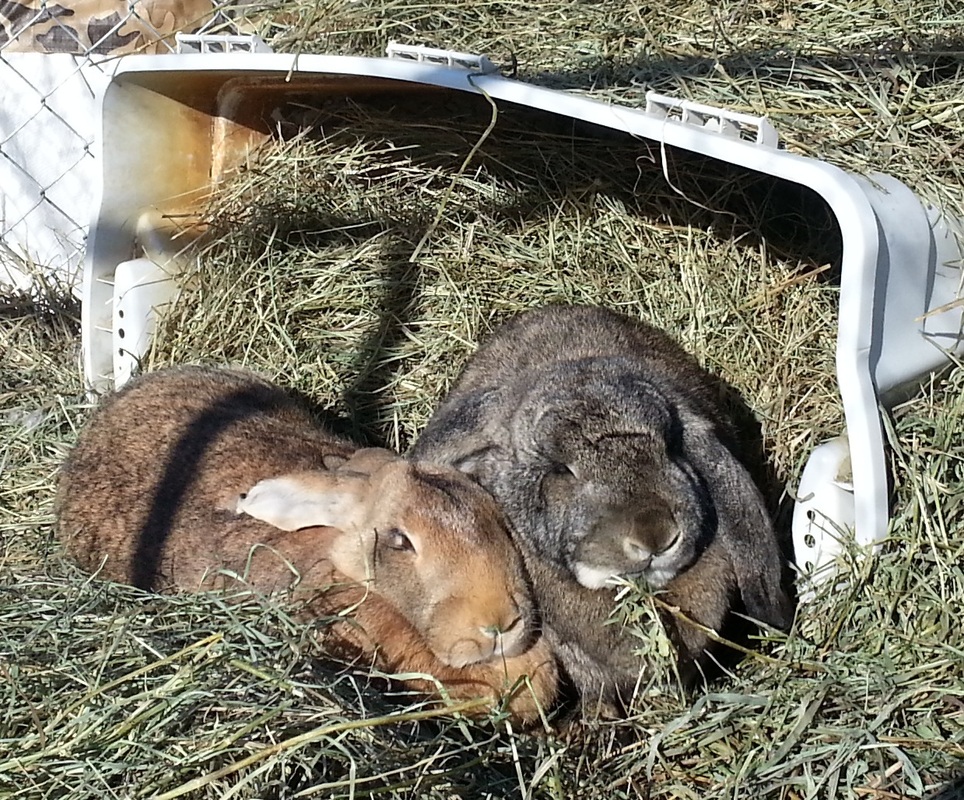
The two girl bunnies have been play mating with each other, so it is time to introduce them to the buck, Peter Rabbit.
0 Comments

Rethinking the Farm

3/4/2014

3 Comments

 
Picture
Experiences shape us and provide fodder for the thoughts that surround our lives. I love farming because I love nature and animals and being on this farm affords me to be with both. But what is the purpose of the farm?

Did I mean to be a meat farmer or to raise animals for fiber? How will the chickens pay for themselves - though eggs or meat? Of what use are the llamas or the rabbits? And so the questions go on.

When I started the venture, I had in mind to farm wool and exotic fiber. To do so does not mean, then, that I need to breed the sheep or llamas, for even castrated males or wethers will provide fiber. Then there is the question of registration. Is it best to register purebred animals or simply keep them on the farm. If there is no breeding going on, then registration is not important, however, for keeping pure lines of rare breeds, registrations may be of a much greater value.

Do I need 3 sheep or 30 sheep? One llama or 4? Do I need a cow, or pigs or even a horse?

Lately, I have been pondering the farm and what it set out to be, a rare breeds permaculture farm, and how it has evolved in three short years to not be a rare breeds farm at all and the permaculture is only starting this year. Maybe I only need one breed of sheep, just a few goats for fiber or milk and one milk cow and possibly one meat cow. Occasionally I could raise a pig or two for meat as well, and the chickens that reproduce themselves by hatching their own eggs, could be kept for meat or eggs, depending on if they laid or not. I believe I have finally come up with a feeding system that will keep the wool of the sheep free from contamination with hay, so the wool will be easy to clean. Up until now, the many systems I have tried have resulted in very much hay lodged in the wool rendering it poor quality.

What really got me thinking was the bunnies. Who does not love the bunnies, cute as they are, but do I need to breed them to raise them for food? Do I want to send the babies off to slaughter to put rabbit meat on the table? Do I want to help my lambs enter this world, care for those who inadvertently become ill or injured and then once healthy, kill them for food? Oh goodness, there is so much to think about now. How much work can one person comfortably manage in all seasons? I think I am more or less at my capacity for animals now and like it or not, some must be slaughtered or sold. It makes the most sense to slaughter them saving the hides for tanning, which provides the most return for the animals. Or maybe, it could simply be a petting zoo of my own and I would never have to send any of the precious lives to the butcher shop? At least I know that the meat is raised humanely with love and fed the best diet for the species so the meat is the best it can be as well.

I need to make some decisions in the next year. Where is the Fat Ewe going? And what is the goal of the farm? These experiences over the last three years provide excellent education to help me on the right path for the farm. I think.

3 Comments

Cindy and Sandy Rabbit

11/12/2013

0 Comments

 
Picture
Picture
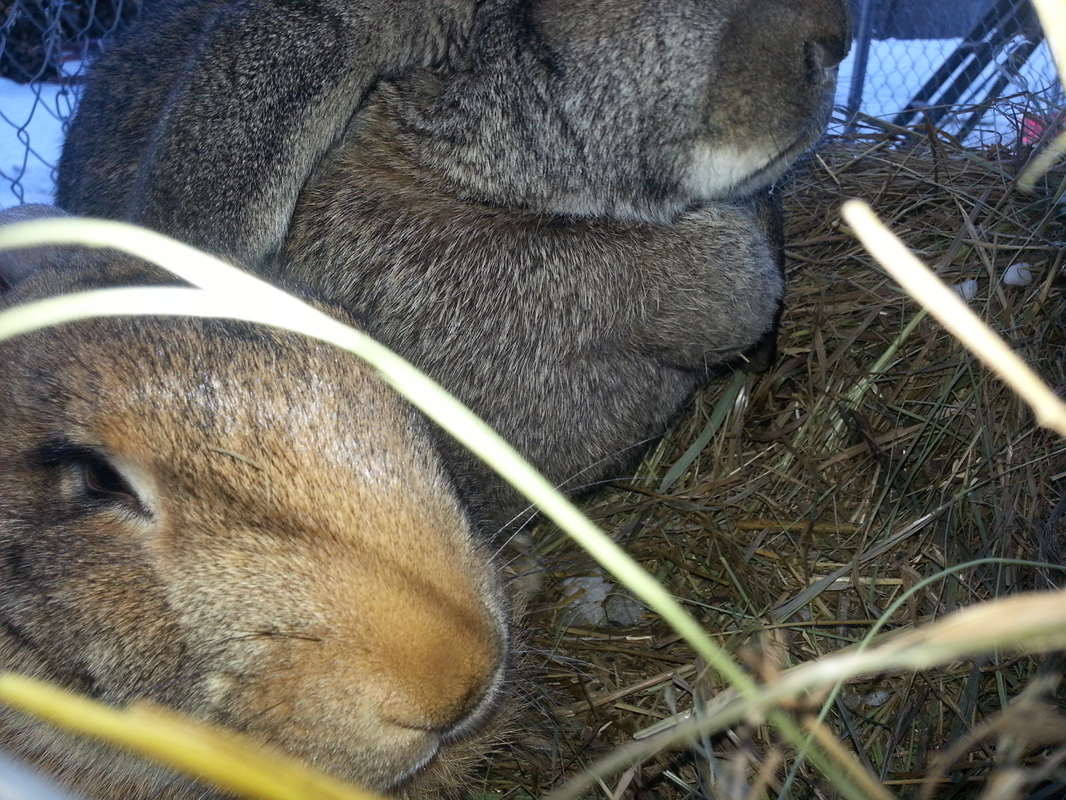
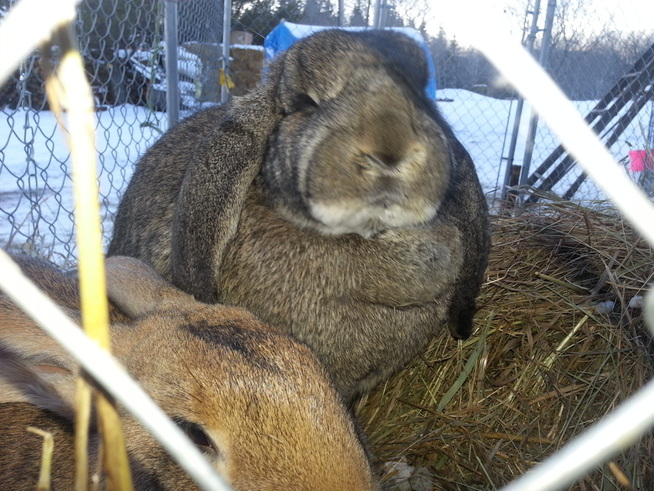
Three rabbits live at the Fat Ewe Farm, a Flemish Giant buck imported from Holland and a locally bred Flemish Giant female, called a doe, plus a French Lop , also local. These are true gentle giants, especially the French Lop. It is hard to imagine eating them, but that is what they are bred for. The rabbits are the best converters of food to meat of all the animals. Pound for pound, two rabbits will produce more meat than a cow in a year if they are bred several times. Each of these rabbits will dress out at ten pounds or so and there are maybe ten babies in a litter, three litters a year. From the three rabbits, then , three hundred pounds of meat can be produced, but they require less space than cows and eat about a tenth of what cows do or less. The manure from rabbits can be utilized without composting, aka fresh, and is full of nutrients and nitrogen.
The hardest part of all this is the fact that they are friendly, sweet and cute. How am I going to eat the bunnies? I have a hard time raising anything to eat it, but I am getting better. At first, I could not eat the pork raised here and now I can. The lamb is better than the store bought because it is strictly grass fed. The rabbits are primarily grass fed too, except for right now. They are getting a little grain, not much, to supplement them in winter. In the wild, rabbits would not eat grain in any quantity, just the odd seeds here and there. I feed them hay and it has leaves, weeds, some twigs and grass in it and should supply all they need to remain healthy. I have put off breeding the rabbits because I am not sure I can go through with butchering their babies, yet, from a point of sustainability, it is a wiser thing to do than to buy a cow. I do enjoy the rabbits and do not plan to eat these three, but what happens when they are old? Geeeeeeee.

0 Comments

Bunnies 

6/29/2013

0 Comments

 
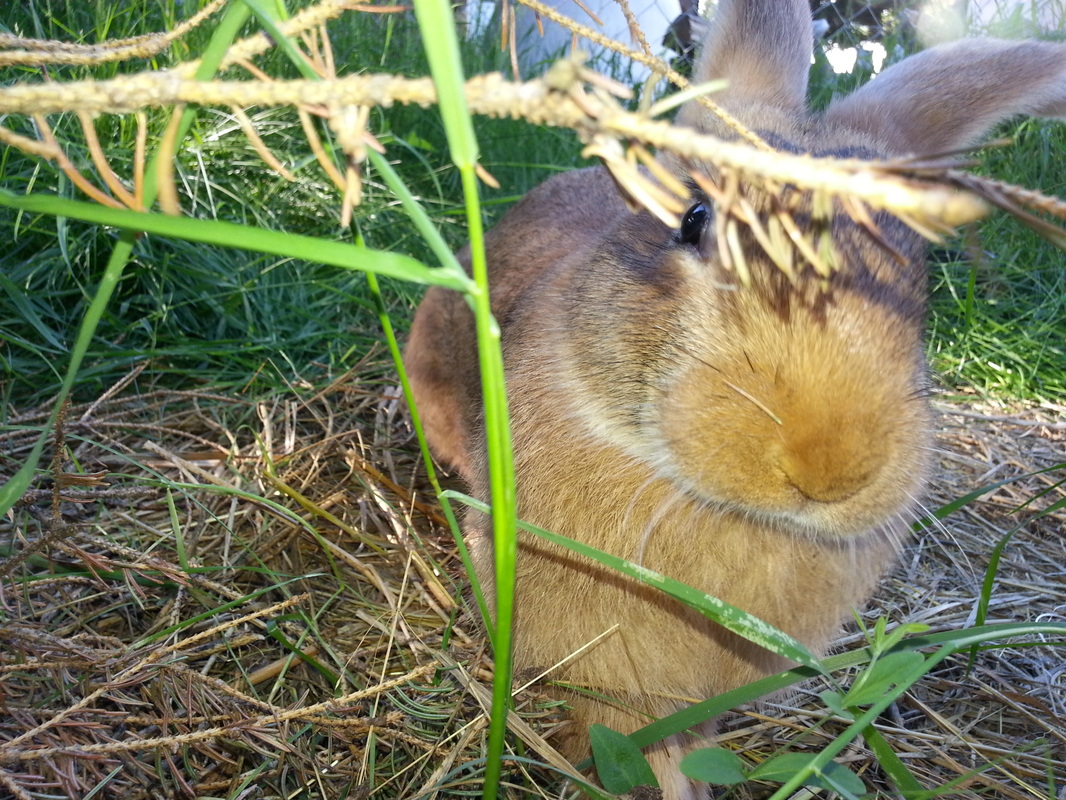
PictureSandy, the new Flemish Giant doe. She is a young rabbit, but can be bred near the end of summer.
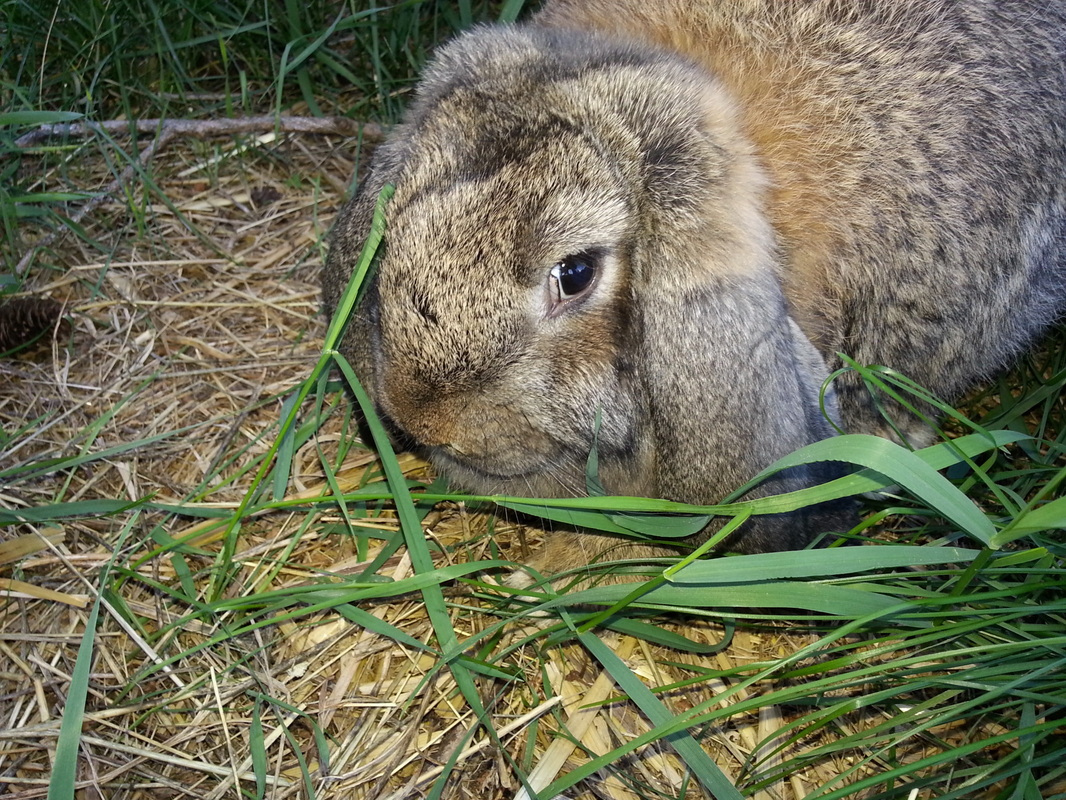
The Fat Ewe Farm rabbits are meat breeds, but any rabbits can be pets if they are socialized and handled as youngsters. The two new girls are for breeding and for pets. Peter Rabbit, the Flemish giant buck, is not so much a pet. He does not like to be picked up and defends his cage from prying hands. On the other hand, the new does are used to being handled, picked up and cuddled because they were raised with children as well as adults. Sandy is not quite as comfortable with all the attention as her new room mate, Cindy Lop Ear. Cindy is a French lop eared big rabbit, but is not full grown yet either. The girls will continue as pet rabbits and Petey will visit when it is time to raise a family, though after he breeds the girls, he will be returned to his domain and have nothing more to do with the family. Mother rabbits only feed their young once daily and they are very helpless when they are first born. Within a few weeks, they are fully furred and squirming around, ready almost, to jump from the nest and explore their world. The does had never lived on the earth before, and though they likely tasted grass, their diet was water and pellets with a little hay. They are quite enjoying themselves in the large dog kennel where they can hop and play and kick up their heels. Welcome to the Fat Ewe Farm bunnies!

Picture
Cindy Lop Ear, the French Lop doe
Picture
0 Comments

    Categories

    All
    Airstream Land Yacht 1964
    Alpacas
    Alpine Goats
    Ameraucana Chickens
    American Buff Geese
    Ancona Ducks
    Angora Goats
    Angora Goats
    Angora Rabbits.
    Babydoll Southdown Sheep
    Babydoll Southdown Sheep
    Bed And Breakfast
    Berkshire Pigs
    Blue Faced Leicester Sheep
    Blue Swedish Ducks
    Boer Goats
    Border Collie
    Border Collie
    Bronze Turkey (Standard)
    Bronze Turkey Standard
    Canadian Horses
    Canadian Horses
    Cats
    Chickens
    Cotswold Sheep
    Crafts And Hobbies
    Cream Legbar Chickens
    Dorset Sheep
    Ducks
    Embden Geese
    E'st A Laine Merino Sheep
    Farm Life
    Farm Life
    Farm Store
    Finnsheep
    Flemish Giant Rabbit
    Flowers
    French Lop Rabbit
    Galloway Cattles
    Gardening
    Gotland Sheep
    Guinea Fowl
    Herbs
    Holstein Steer
    Icelandic Sheep
    Jacob Sheep
    Japanese Bantam Chickens
    Jersey Cow
    Kahaki Campbell Ducks
    Karakul Sheep
    Kiko Goats
    Kilo Highland Cows
    Light Sussex Chicken
    Livestock Guardian Dogs
    Livestock Guardian Dogs
    Maremma Sheepdogs
    Maremma Sheepdogs
    Meishan Pigs
    Miniature Nigerian Dwarf Goats
    Moose Hills Inn
    Muscovy Ducks
    Norwegian Red Dairy Cow
    Nubian Goats
    Nygora Goat
    Ossabaw Hogs
    Partidge Chantecler Chickens
    Pekin Ducks
    Permaculture
    Pied Guinea Fowl
    Polish/Ameraucana Bantam Cross Chickens
    Polled Dorset Sheep
    Potbelly Pigs
    Pygmy Goats
    Recipes
    Rigit Galloway Cows.
    Romanov Sheep
    Romney Sheep
    Rouen Ducks
    Saddleback Pomeranican Geese
    Saxony Ducks
    Sebastopol Geese
    Sheep And Goats
    Shetland Sheep
    Silver Spangled Hamburg Chicken
    Soap And Hand Made Cosmetics
    Standard Jack Donkey
    Sustainability
    Swiss Blackneck Goats
    The Llamas
    The Llamas
    Toulouse Geese
    Tunis Sheep
    White Chantecler Chickens
    White Danish Geese
    Wool

    Author

    Fluffy writes daily about the experiences on the farm and with the bed and breakfast patrons. 

    Archives

    October 2020
    September 2019
    June 2019
    March 2019
    January 2019
    November 2018
    December 2017
    November 2017
    October 2017
    September 2017
    August 2017
    July 2017
    June 2017
    May 2017
    April 2017
    March 2017
    February 2017
    January 2017
    December 2016
    November 2016
    October 2016
    September 2016
    August 2016
    July 2016
    June 2016
    May 2016
    April 2016
    March 2016
    February 2016
    January 2016
    December 2015
    November 2015
    October 2015
    September 2015
    August 2015
    July 2015
    June 2015
    May 2015
    April 2015
    March 2015
    February 2015
    January 2015
    December 2014
    November 2014
    October 2014
    September 2014
    August 2014
    July 2014
    June 2014
    May 2014
    April 2014
    March 2014
    February 2014
    January 2014
    December 2013
    November 2013
    October 2013
    September 2013
    August 2013
    July 2013
    June 2013
    May 2013
    April 2013
    March 2013
    February 2013
    January 2013

    view old blog site

    RSS Feed

Powered by Create your own unique website with customizable templates.