The Fat Ewe Farm and Bed and Breakfast
The Fat Ewe Farm and Moose Hills Inn
Organic Permaculture Farmin' for
the Lazy Ewes
  • The Fat Ewe Farm
  • About Us
  • Blog
  • The Fat Ewe Farm Store
  • Livestock Breeds (click here to see all the breeds)
    • Angora goats
    • Icelandic Sheep
    • Jacob sheep
    • Old English Southdown Babydoll Sheep >
      • Babydoll Sheep on the Fat Ewe Farm
  • Contact Us
    • Photo Gallery (click here for some awesome photos or watch the slideshow) >
      • Video Slide Show
    • Phone Number
    • Map
  • Sale Barn
  • Recipes From the Fat Ewe
    • Old Stuff
  • How Much Meat Do You Get?
  • Ukrainian Easter Eggs
  • Moose Hills Inn

Changeovers

4/5/2017

2 Comments

 
Picture
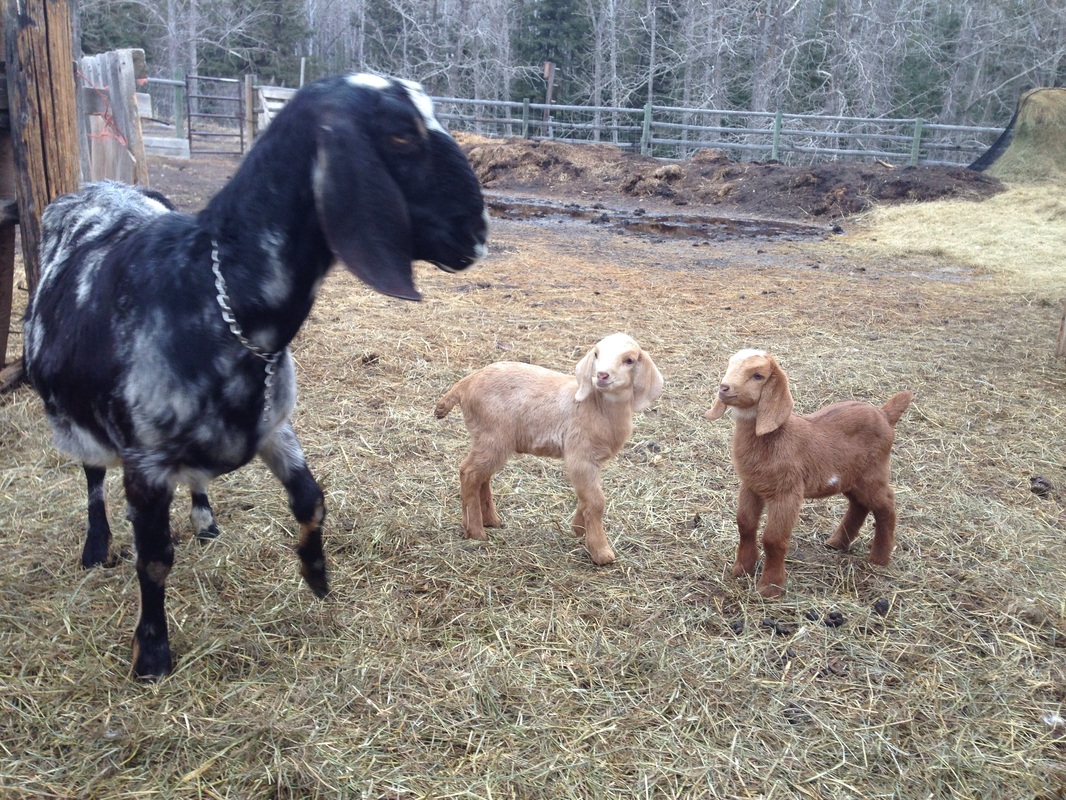
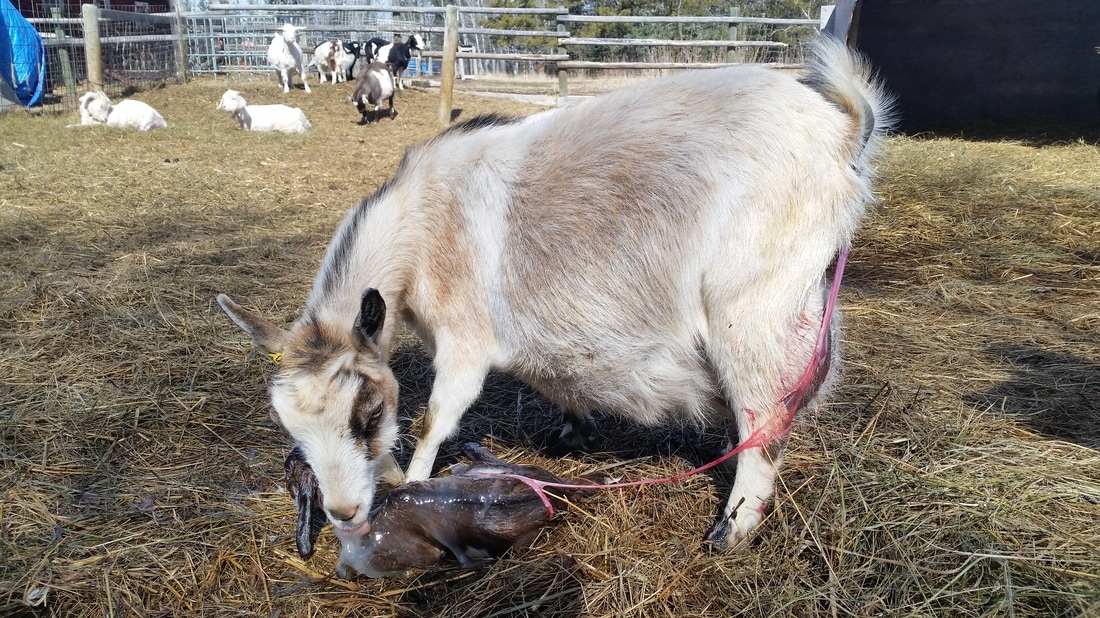
Daphne, purebred Nigerian, giving birth to Nubian sired triplets, two doelings (girls) and one buckling(boy).
Picture
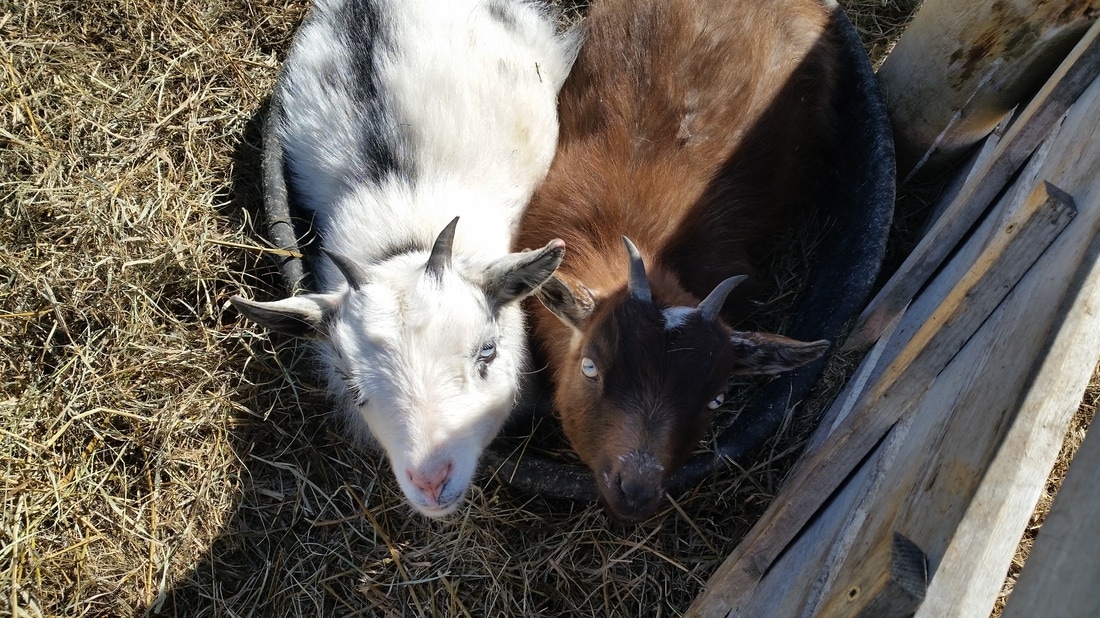
Two little blue eyed Nigerian Dwarf doelings.
The Fat Ewe Farm started out with Nigerian Dwarf goats. Much research had been done prior to bringing the first ones on board. Daphne was just a kid, a doeling about 4 months old way back then. She has consistently produced quadruplets since then, earning her keep and then some. She is a wonderful mother and an easy goat to keep healthy. The goats are not grain fed, so I must be diligent to find weedy hay for them. That is what they would eat, plus tree and shrub leaves, if they were able to choose their food. Weeds have deep roots and bring up nutrients that grass does not have. Grass is their last choice. The goats do get free choice salt and minerals, too, but they do not eat as much minerals when they have the right hay. Anyhow, Daphne has managed her own parasite load for the most part too, not requiring chemical wormers to keep worms at bay. I believe a healthy animal is basically pest resistant, or at least, pest managed. Daphne has a huge udder and can easily feed her quads, though as she is getting a little older, I usually have taken one or two from her to give her body less of a strain. 

Nigerian Dwarf goats are hardy little critters, weathering our cold winters well. They grow a fuzzy coat with a downy layer that insulated them very well. 

Nubian goats are full sized goats, renown for their delicious, rich milk and mellow natures, but they are not at all hardy. Nor are they great at staying healthy. They need many interventions to stay healthy. That is where the cross is most beneficial. Nigerian Dwarf goats and Nubian goats are both dairy goats. The Nubian/Nigerian cross, or mini Nubian, brings the best of both breeds to a small stature, good natured, hardy and easy to handle goat, perfect for small holders who want fresh milk. 

There are three doelings born so far. There is only one more purebred Nigerian left to give birth and the others are Angora/Nigerian crosses. The Angora goat is a very milky goat, but is bred for fibre. The Nigora, or cross, has lovely spinnable fibre, is very milky and much hardier and better at mothering and birthing than Angoras. The Nubian/Angora/Nigerian Dwarf goats likely will not have that lovely fibre, but they will grow a warm winter coat and be very milky. Still, they are not classed as Mini Nubians, but close. 

So, since my fibre farm is not a success due to distance, proximity to those who work in the fibre arts, and the fact that we feed hay year round which contaminates the fleece, I am switching from fibre animals to food animals. Mini Nubians are the perfect choice. As of today, there are five first generation, or F1, Mini Nubian doelings on the farm and possibly a few more to come. A new mini Nubian buck is coming for breeding. The girls will be 7 months or older by December, perfect for breeding. Their kids will be F2 mini Nubians, that is mini Nubian bred to mini Nubian and the resulting kids will be considered true Mini Nubians. 

I do not mind milking goats and love goat cheese. I am not sure what the farm will look like in a few years and where I will relocate when I retire. I did promise my dogs that I would not leave them when they are old, so I may stay on with just three or four goats and three or four sheep, a few chickens and such, until the dogs are gone. Time will tell. Hopefully you will still be with me. Thanks for joining the Fat Ewe Farm!
Picture
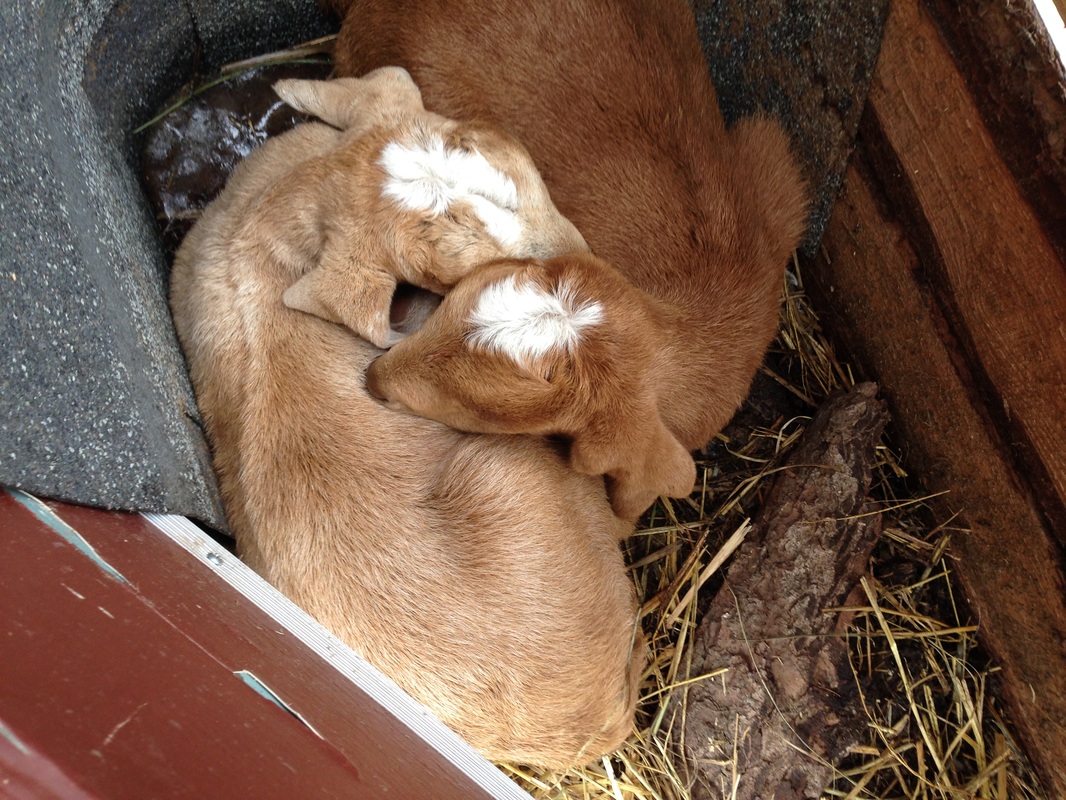
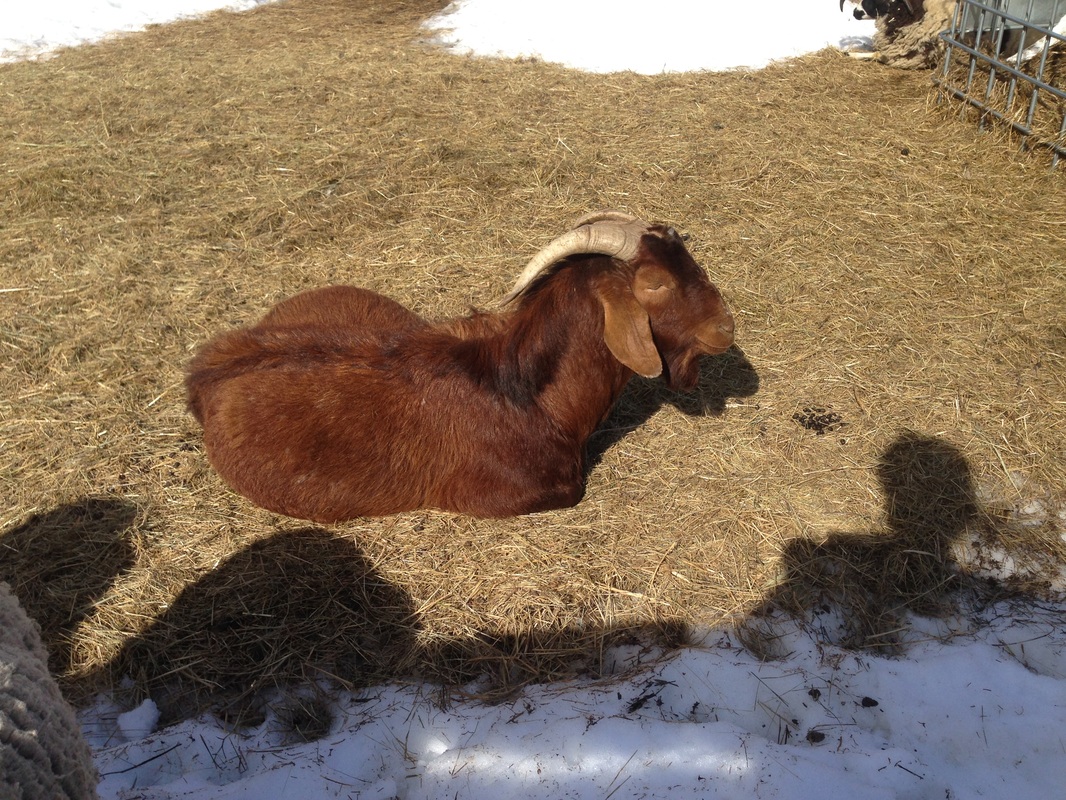
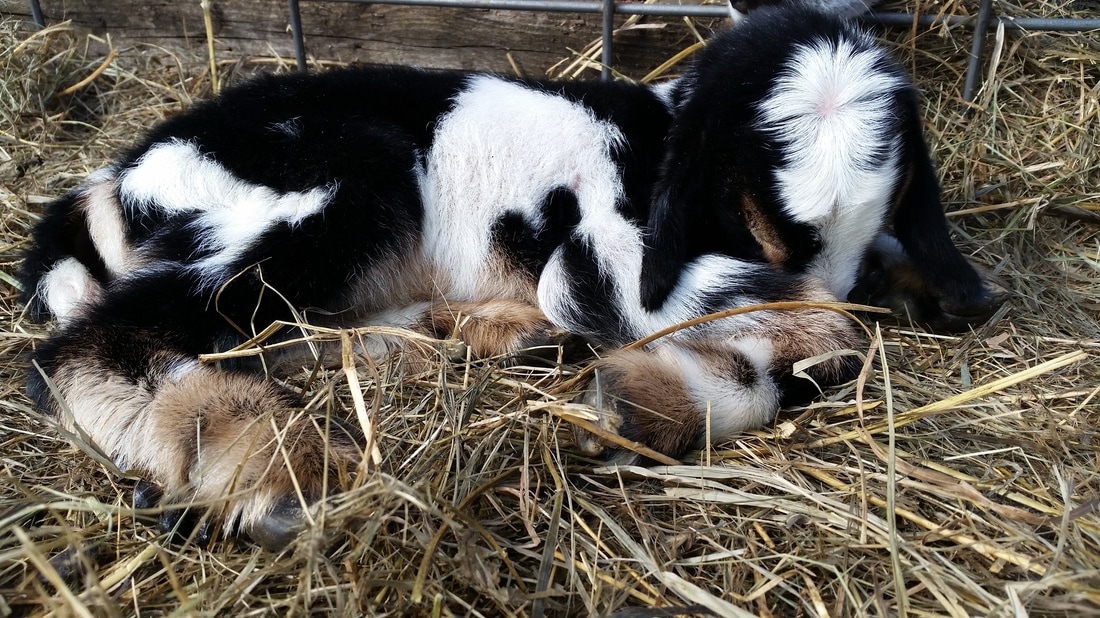
F1 Mini Nubian buckling sleeping soundly.
2 Comments

Puzzle Solved

4/3/2017

0 Comments

 
The goats are having babies, but technically, I did not believe they were due until the 25th of April. That is when Stevie Wonder went in with the girls. 

But, for a few weeks prior to that, the Nubian buckling, Wimpy, was in the goat pen with the ladies. I saw Wimpy a lot and it appeared he was not interested yet in breeding. He showed no sign of rut, which is the hormonal time for male goats where they get themselves stinky for the girls by peeing on their faces and front legs. Gross, I know, but the hormones or pheromones do attract the does and get them cycling. Stinky male goats seem to do it for them. Anyhow, Wimpy was not like that. He was just his usual self, wimpy. I gave him that name because he was a quiet boy, not overly large for a Nubian and not very feisty either. I was not even sure he would make the winter because he was cold already in the fall when there was not even any snow yet. But he did. And he did something else.

He bred the does. 

Yup, he did that. Nix was bred to the Nigerian Dwarf buck, Stevie Wonder, but Nix never stayed in the fence and one day Stevie got over there. Unfortunately, Nix lost her little girl because she chewed her umbilical cord entirely off and the baby bled and fell asleep forever. So sad.

But the other goats were beginning to develop udders much too large for being due in 3 weeks. And there were other signs too, that made me think something was off. Then yesterday, Christina had a baby and it had long floppy ears and long legs. Well, I'll be. He is Nubian sired. Wimpy is a daddy! Then today two more does had their kids and both are Nubian sired, or course, because Stevie did not even get in the pen early enough for the girls to birth now. So, those goats that are giving birth this and next week and possibly the week after will all be Nubian sired.

The cross, Nubian and Nigerian Dwarf, is called a mini Nubian. This is a first generation and several breedings will be necessary to actually call the goats mini Nubians, however; even this F1 first generation cross are indeed Nubian/Nigerian. Both Nubians and Nigerians are milk goats, but Nubians are not hardy here, while the little Nigerians are real troopers. They impart their strength to the Nubians and since both are excellent milk producers, the smaller mini Nubians, do produce copious quantities of milk too. I have two mini Nubians, blue eyed at that, from a different breeder. Normally, the Nigerian Dwarf buck covers the Nubian females, but since Wimpy was small for a Nubian, I did it the other way. The babies are larger than the Nigerian Dwarf kids, but not too large thus far to be problematic. It has resulted in singles so far, which is fine. That will be singles with the exception of Daphne who is so big she is having trouble walking. She usually has quads and I am worried about her carrying four larger babies than normal. She is a very good mother and births without complications, cleans her kids and has them all up nursing in no time. She can support all four, but I have been removing two in the past couple of years as she is getting a little older.

So, the puzzle is solved. Wimpy, though he not once appeared to be interested in breeding, is a sneaky, sly buck who managed to get the job done in the dark or something akin to that. Wimpy is a daddy! 
Picture
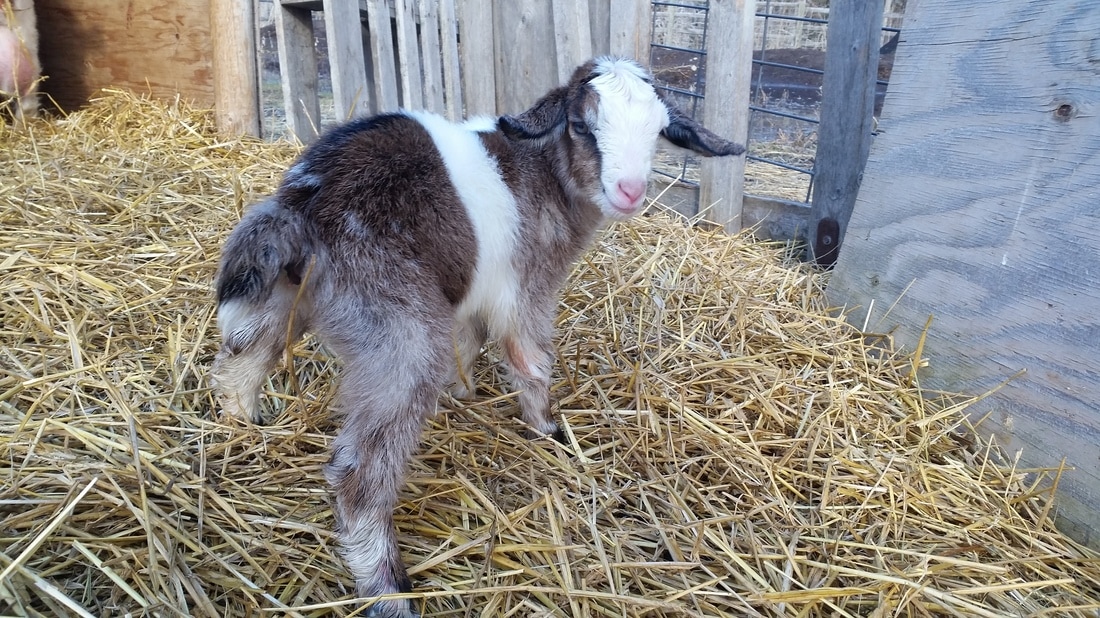
She is a mini Nubian!
Picture
Fuzzy little mini Nubian!
Picture
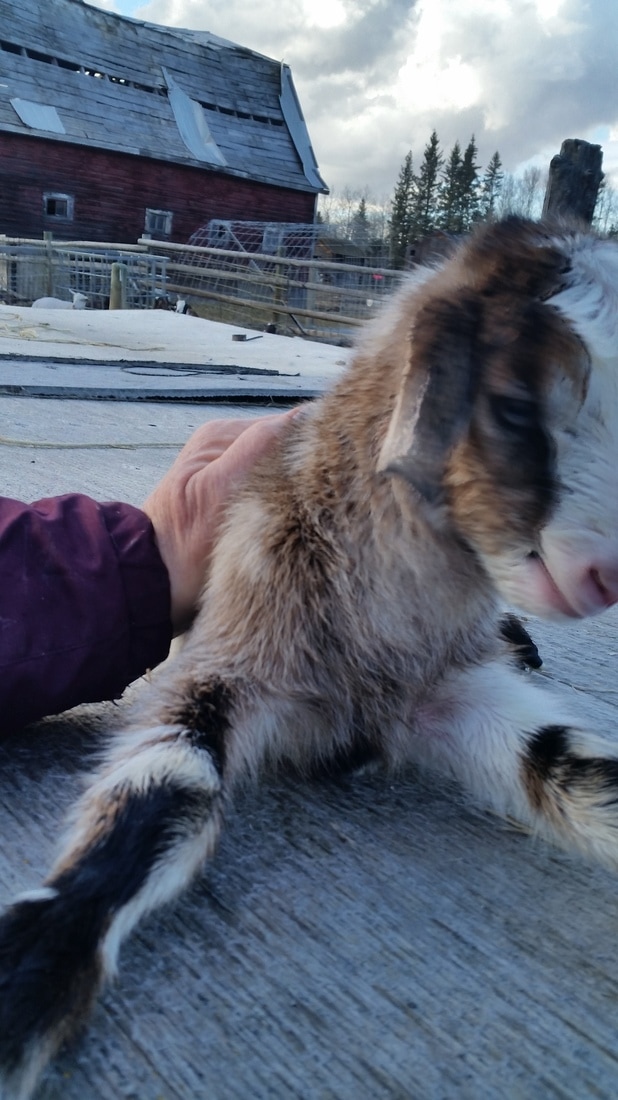
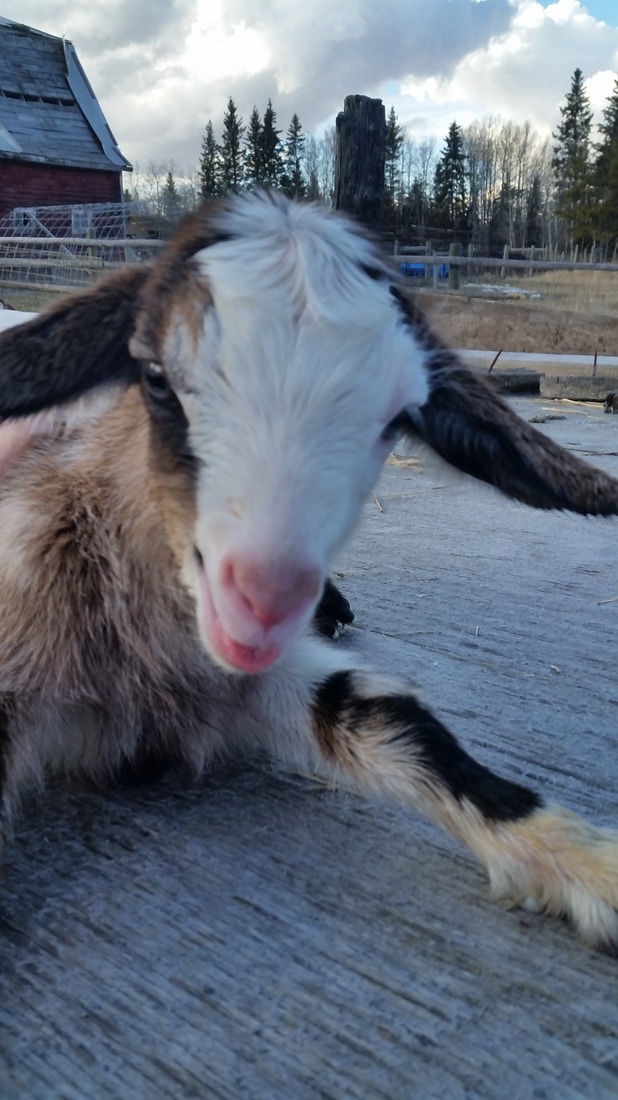
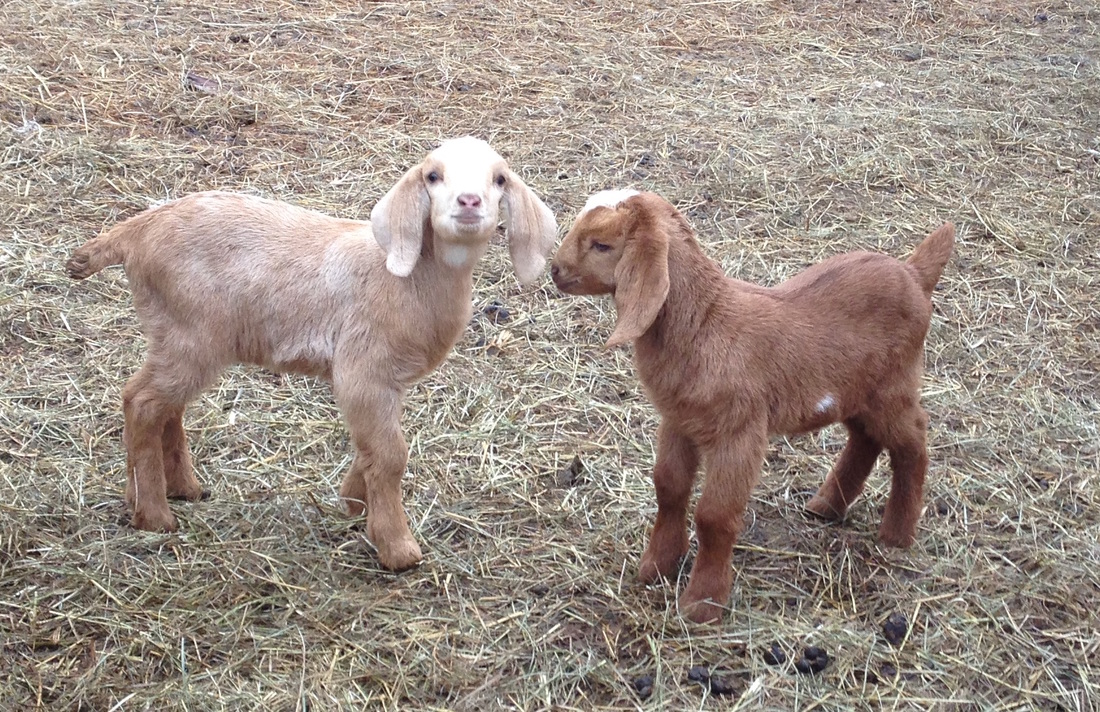
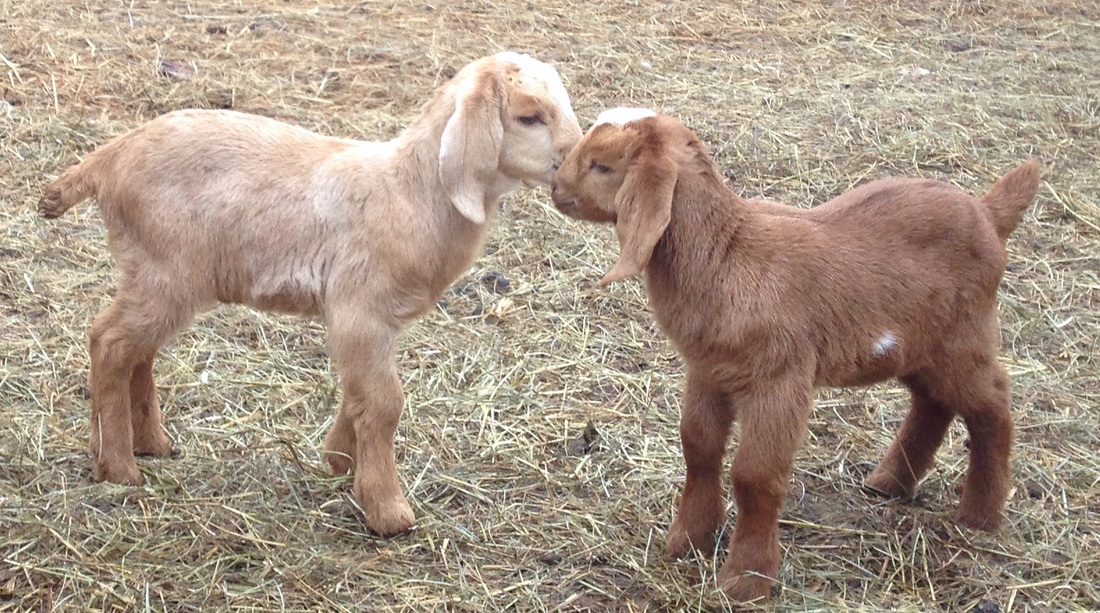
This little darling doeling is already full of mischief. Those airplane ears are from the Nubian and Nigerian cross.
0 Comments

Little Lambs and Kids

4/2/2017

0 Comments

 
The Fat Ewe Farm is off to a good start after a mishap. Nix had a single doeling, but in her overzealous cleaning of her kid, she nipped the umbilical cord and the kids lost blood, never nursed and expired. She was a beautiful fawn spotted little girl. I did milk Nix for a few days and her colostrum will be invaluable to the lambs and kids that may be rejected. The last year I had zero rejects. This year I can only hope to be so fortunate. 
Tina has been looking as though she was very ready, and lost her mucous plug a few days ago. Her vagina is soft like jelley too. Her mother Christina, showed no signs of birthing, but it was the mother that segregated herself around 7 pm while the others were feeding. I continued feeding and moved on to the sheep, but heard the telltale cry of a doe in labour. I try to be as hands off as possible, so stood back to watch. Joe, one of the livestock guardian dogs came in and so did Robbie. I told Robbie to go out and he positioned himself where he could see but not really be seen. Joe, the perfect guardian, kept his distance and listened and smelled. Guardian dogs should not be too near mothers in labour and never help with the clean up. When the baby was delivered and all was well, Joe moved back to the sheep pen. Good dog Joe!

Mom was doing a lot of air licking and screaming. The kid presented correctly, with the front feet and nose first, but her amniotic sac did not break. The little fellow was very big actually. Christina is a smaller Nigerian Dwarf and this is her second kidding. She was a daughter of a very prolific healthy herd boss and obviously did not inherit the tendency to multiples as last year she had just Tina. 

I let the mother scream and push without intervention, but then she sort of petered out, so I broke the sac to give her a little relief and brought the second foot through for her. It was a beautiful little buck! 

The surprise is that is is sired by the Nubian. I put the goats in with the Nubian buckling first, but saw no breeding or interest from him at all, so brought in Stevie Wonder about 2 weeks later than the Nubian. All the does that are going to kid for the next couple of weeks should be Nubian/Nigerian or mini Nubians. This is a relatively new cross and is fast becoming popular. Both breeds are dairy, but the Nubians are not cold hardy, whereas the Nigerians are tough little ones. I have two of these crosses and they are as hardy as the Nigerians. My original plan was to breed the Nigerians and Angoras to the Nubian and begin the first generation cross. I have a mini Nubian buck coming for this fall to do this again and then the first generation can be bred to the second generation the following year for an F2 cross, bringing the cross more into stability. 

The lambs should not start coming until April 25th, so that will give me a little reprieve. I helped towel off the new arrival and held him so mamma could see to lead her to the barn. She has fresh water and some hay there and the barn will be nice and warm for the little buckling tonight. Before coming in, I made sure he was nursing and all was well. 
It was a good evening! Tomorrow I will take some real photos of the buckling and hopefully of Tina's kids as well. She is larger than her mother, so I suspect twins at least. Til then....
0 Comments

Ladies in Waiting

3/15/2017

0 Comments

 
The goats still have at least 4 weeks left before the babies come, but this year they are huge. The hay was particularly great, with everything the goats love to eat, except the grass. It was chock full of weeds, dandelions, thistles, strawberries, clovers, wild flowers and herbs. The hay came from Lac La Biche, about an hour and a half from Elk Point, from a farm that has not used any sprays in a long time or possibly never. The farmer was thinking of tilling the fields over and planting hay. Oh, goodness, that is the worst thing he could do. The minerals and nutrients in the weedy hay far will surpass any monocrop of modern hay he could ever plant. Weeds dig down deep with roots that can draw all that the plant needs, whereas modern grasses just do not compare. With poor feed, comes lack of parasite resistance too. The animals immune systems are compromised because they are struggling to stay well nourished. My sheep and goats have hardly touched their minerals this whole winter because they are well supplied from the beautiful weedy hay. 

But, that means multiples and big babies, since the does can send lots of goodness to the developing fetuses. Poor Daphne, well, she looks like a beached whale already and has another month to go. She may deliver a week early if the babies get too large for her to manage. I will take time off work then and try to be available round the clock in case of complications. I have been very selective over the years and my goat herd is amazing! The does kid without problems, have the babies cleaned up and nursing within minutes, and Daphne can handle her quads, though I usually take two from her to ensure she is not depleted too badly. She is already 6 and in the prime of her life. She has given me beautiful goats that carry her amazing strengths. The buck, Stevie Wonder, is also excellent quality, hardy and naturally able to fight off pests that weaker goats succumb to. The babies should be incredible! Daphne has brown eyes and Stevie has blue, so at least some of the babies will have blue eyes. There are two of Daphne's daughters in the goat herd as well. 

I had another incredible goat, Cecelia, who was the herd boss, but I sold her with her quads one year back, though kept two of her doelings. I did not have Stevie then and it will be interesting to see how the babies turn out. Already the does are very pregnant, so I am guessing they will have twins and triplets at least. 

There are some new goats that came to the farm just a couple of months ago. I am positive that the mother is purebred Nigerian Dwarf, but cannot attest to the lineage of her daughter and three granddaughters. The previous owners really did not have much of a clue as to the parentage. All five of the newbies are blue eyed though. 

There is also Wimpy, the Nubian buck. He is really small for a Nubian, but he is purebred. I am hoping he will breed some of my Nigerians this fall and a new buck is coming as well, a Nubian/Nigerian cross, or mini Nubian. There are two beautiful princesses, Lena and Leah, who will marry him then. As much as I absolutely love the Nigerian Dwarf goats, Lena and Leah have really stolen my heart. I hope they will be my future milk goats, along with their daughters. Since downsizing is in order for the farm as I am getting older, I will be parting with many of my current herd members too. There are 22 goats currently and I would like to cut that down to maybe 8 or 10 for next winter. 

But, babies are coming and although it is a stressful time, it is my favourite time of the farm. Stay with me for lots of photos and the frolicking antics of the new goaties. 
Picture
0 Comments

Maddy's Kids

4/9/2016

0 Comments

 
Picture
Picture
Picture
Picture
Picture
Maddy, Dori and a buckling were purchased from a goat dairy 2 years ago. They were not in good shape and the buckling actually passed away in the winter. It has been a struggle keeping Maddy and Dori healthy. The vet said they were likely routinely dewormed incorrectly causing the worms to become superworms that they carried and they became resistant to chemical wormers. We are trying yet another product given in regular doses over a period of 2 months, 4 applications every 14 days. The theory is that the newly hatched worms will be decimated with each application finally leaving the goats worm free. Then they need to be moved out of their pen and not return for a year. 

Richie, the buck, was advertised as a Kalahari Red goat, and I was a little interested in him then but did not pursue his purchase. He was bought by another person and although she tried to sell him, she did not and was moving so gave him to her neighbour. The neighbour gave him to me. As it turns out he is a red factor Boer goat and a very nicely put together buck. 

Matti and Dori were not bred last year because they were not very strong. Over the summer, they thrived in the bush pasture and were fat and sleek in the fall, so I decided to put Richie to use. 

The result, so far, is that Matti has twins, a buckling and doeling, and they are ever so cute. The little boy is very masculine, like his dad, but a light fawn red colour and his sister is very feminine and a redder colour more like her father. I was sort of hoping that one or both would have the moonspots, but they are so cute, it doesn't really matter. Matti has an excellent temperament and is easily handled. Richie was a bottle baby and as such, is friendly but can be pushy, not realizing that what he did to play as a baby is not the same as a 250 pound adult. I am hoping to train the doeling to milk, like her mother. 

You should come over and play with the kids! 
0 Comments

The Goats are Ready

3/28/2016

0 Comments

 
There are 4 and possibly 5 goats ready to give birth so far. Some of the younger ones will likely not have caught until the next year, which is fine, because they are young. The older girls, though,  are very ready. Lily, the Kiko has a very developed udder but it looks like it might be a week or even two yet for her. Both Nubians were bred to the Red Boer goat. Maddy, an old girl and her grand daughter Dori, two generations younger, were bred to the Red Boer, Richie Rich and both are looking quite ready. I don't think that billy goat wasted any time. 
Daphne, my best goat, usually has quads. She is very thin now, despite all my efforts this winter to keep weight on her. She is a NIgerian Dwarf and has tons of milk for such a little girl. I have never milked my goats before, but I think this year, I will see if I can sell the Nubian/Boer kids and several of Daphne's kids, depending on the number she has, so the moms do not have to put out so much milk. The other option would be to separate the kids, milk the moms and bottle feed the babies. That is a lot of work! I do have a milking stand and am prepared to do that if I feel like taking the task on. I am debating. 

So, Lily Kiko, Daphne Nigerian Dwarf, Maddy and Dori Nubians are ready to go. I check on them many times a day just in case problems arise, though they are all experienced mothers. 

There are still a couple of other goats that are bred but are not looking as though they will deliver for a few more weeks.Bonnie Cashmere is lying down a lot, but there does not seem to be any reason for that. She is a first timer and may not understand what is happening to her. Sofi is Nygora, Angora and Nigerian Dwarf and 13 is a pure Angora. It is harder to tell with the Angoras unless they are shorn and she is not. The shearer was supposed to have come, but the weather did not cooperate and we had snow instead. 

Usually the goat kids sell exceptionally well. I have only kept back the best of the best, so the kids are always beautiful. The buck this year is blue eyed too, for the Nigerian Dwarf and though he is little, I think he got the job done. The kids should be amazing. Stay tuned for baby pictures. 
Picture
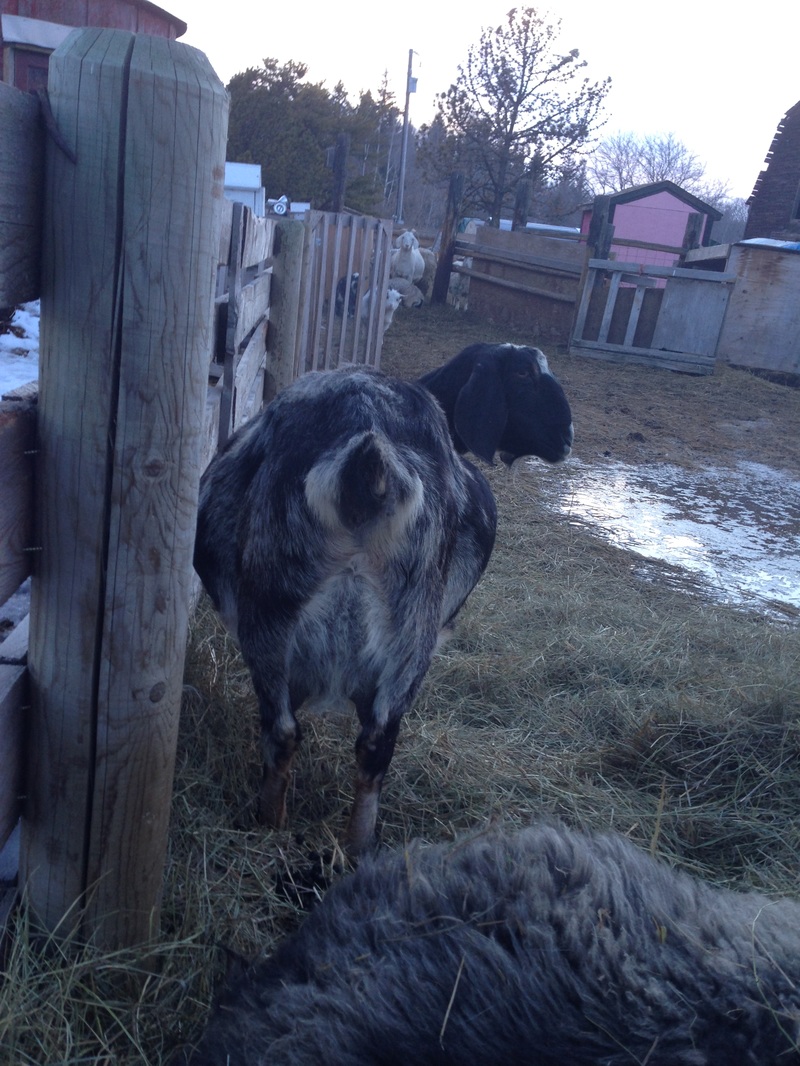
Dori from behind looking rather large
Picture
The sweetest goat, Daphne,always has quads
Picture
Maddy is looking rather large too
Picture
Lily is Kiko bred to a Kiko. She is rather stand offish, not having been handled or with much contact coming from a larger herd.
0 Comments

The Breeding Begins

11/3/2015

0 Comments

 
Picture
Lily is the white goat looking at Ari, who does not seem to know what to do. He is a young male, born this spring, but I am sure he will figure it out quickly enough. The sheep would like to play a part in this breeding too and their turns will come soon enough.
Picture
Dori, first left, Mattie in the middle and Ritchie on the right. They will produce some very fine Nubian cross babies. Dori and Mattie are milk goats and are halter trained and trained to milk. They were not well enough to breed last year, but after a year of respite and care, they are ready this year.
The sheep and goat have been in rut for a month now. The male goats pee on themselves and the hormones they produce seem to attract the female goats. The girls rub up against those stinky boys and love every minute of it. 

Little Stevie Wonder got to go visit the majority of the girls today. He is very young to breed and some of those goats are likely too large for him. The cashmere goat will be a first time mother and I will remove her to have the Angora buckling breed her and have Cashgora babies, babies with curly cashmere. They must be so cute. Stevie and Timmy, the Angora, oh and the Kiko, Ari, have not bred before, so it might take them a little time to figure it all out. They will stay with their group for 6 weeks, then I will switch the bucks around in case they have not done their jobs. Hopefully the girls will all be bred for delivery 5 months from now, which will be April, when our winter weather is finally saying goodbye. 

Ari is with Lily, just the two of them. They are both pure bred Kiko goats. 

Matty and Dori are with the new buck, Ritchie, who is supposed to be a Kalahari Red, though I don't know of anyone who has those around here. Ritchie and Lily had they hooves trimmed today, but I could not catch Ari. I plan to trim two or three animals per day until they are all done. The goats I did today were done standing up. I haltered them and tied them tight to the fence post, then body checked them to the fence and brought the foot back at the knee. It was more comfortable for me than flipping them and trimming while on the ground and I think it was more comfortable for the goats too. 

The goats were out of their pen twice today and headed straight for the grain that was out for the pigs and birds. It is a good thing I was home and caught them. Wilbur, the pot belly boar liberated them both times, but then I chained the gate so he could not dislodge it and all is well. Bonnie, the cashmere goat, is very bonded to the Nubians, who were sort of like surrogate mothers to her when she was little. She is calling for them all day, though they are happy with Ritchie in the pen far on the other side. 

Over the next week or two, the sheep will be divided for breeding too. I had to drag Lily the entire way across the barnyard to get her to the pen where she needed to be. She basically dug her four feet in and it was a drag the goat fest from there on. She weighs probably 125 pounds, so it was not a simple task dragging her all the way through the mud. I hope the sheep are more cooperative. I have an idea of how to separate them. I plan to feed them some grain in the corral set up in their pen and grab those I want and send them out of the coral. Then I will lure them with a bucket of grain to their new digs. They are not fed grain normally, but this year's hay is not up to par, so they will get a little to supplement them over the winter. 

I have not seen any keds, wingless biting flies that live on the sheep only, so far. In the dead of winter is when they multiply and become visible. I will treat them immediately with pour on Ivermectin this time. They ruined some of the fleeces last year and I don't want it to go that far again, now that I know what to do. The sheep will be checked for parasites (worms) and treated if necessary using the FAMACHA system, which looks at the bottom of the eyelid for anemia. Pale pink to white eyelids mean a high worm count, pink to red means that the sheep is managing its parasite load on its own. Tapeworms are the one thing that the FAMACHA test does not account for, so the droppings must be observed for tape segments, the telltale sign of the worms. Then the groups will be busy until the new year, when the rams can go back home and the ewes can again join one another preparing for their babies. At that time they will need good food and warm shelter so they can support their pregnancies the very best. 

And so, with the short days, there are events to be anticipated and little hooves to be watched for in the new year. Spring on the farm is such a wonderful time of the year with the new babies and the outpouring of emergent life everywhere. I am grateful for my farm and my stewardship of the animals. What a blessing they are to me. And so, the breeding begins.         
0 Comments

The Nubians, a Year Later

7/12/2015

0 Comments

 
Picture
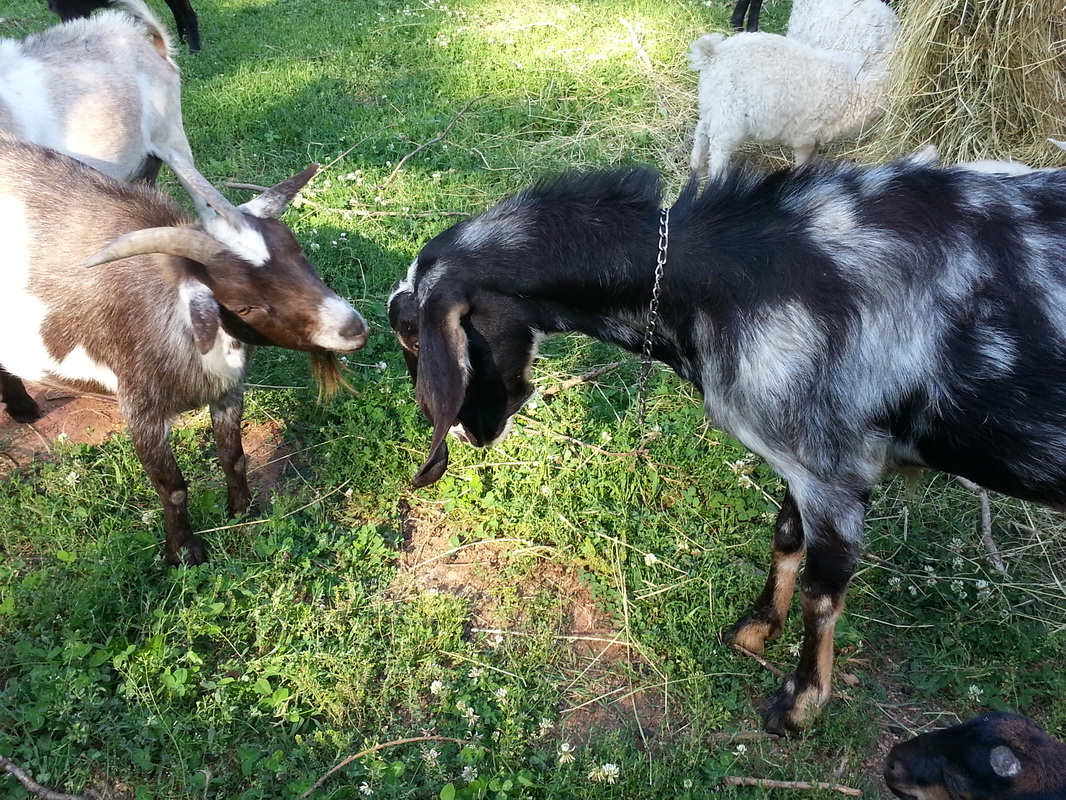
When Matty arrived she was trying to make friends with the herd boss, Celia, who told her in no uncertain terms that friendship was out. She was the boss and that was final. Celica has been sold this year, but two of her daughters are retained.
Picture
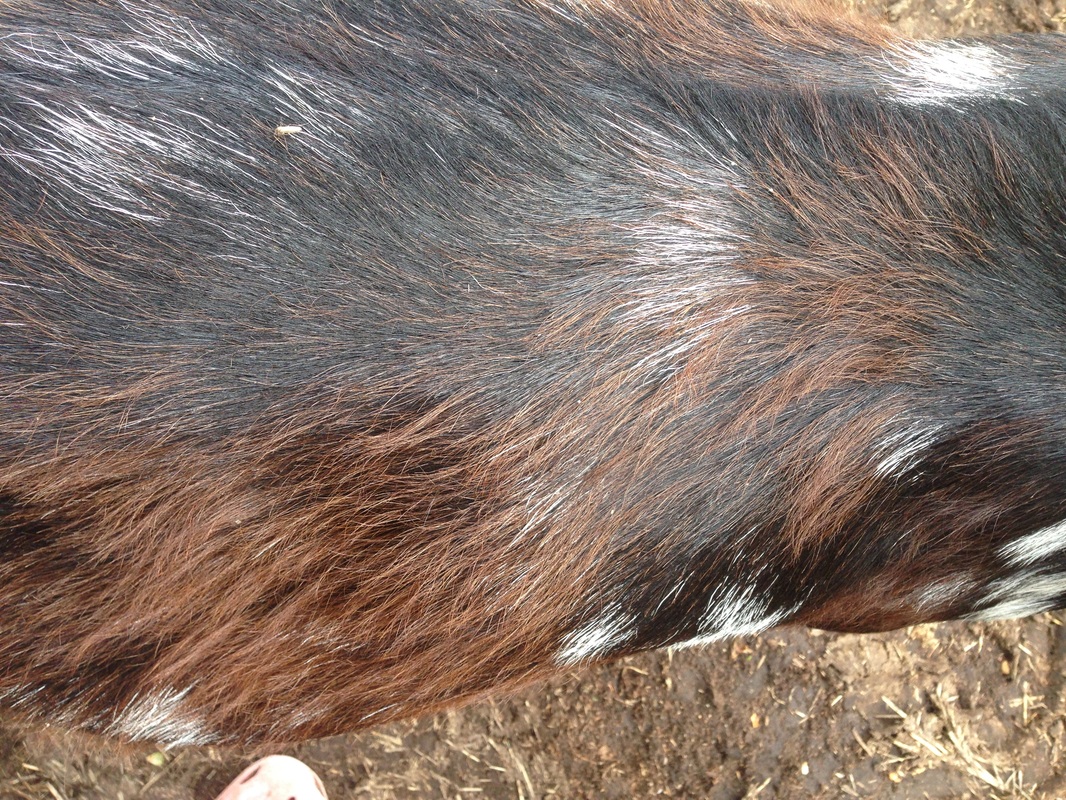
Matty's copper coat is finally turning black and her new growth is the colour it should be. Yay!
Picture
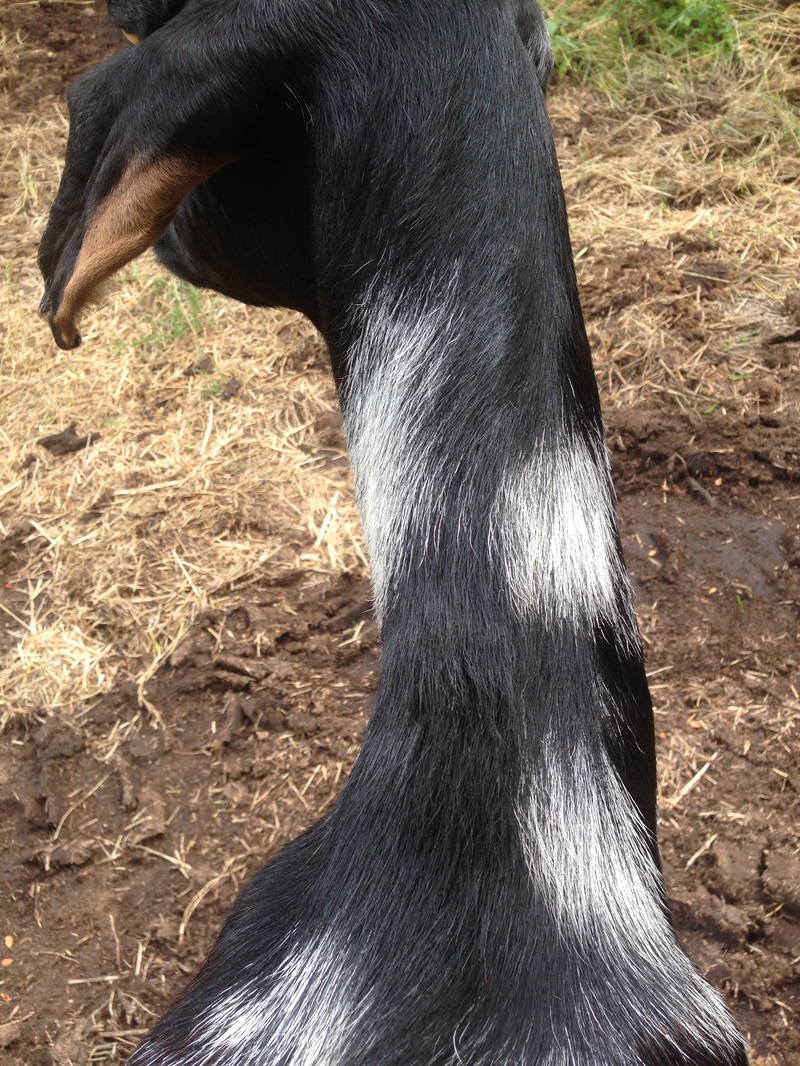
Matty's neck is already black and white as it should be.
Picture
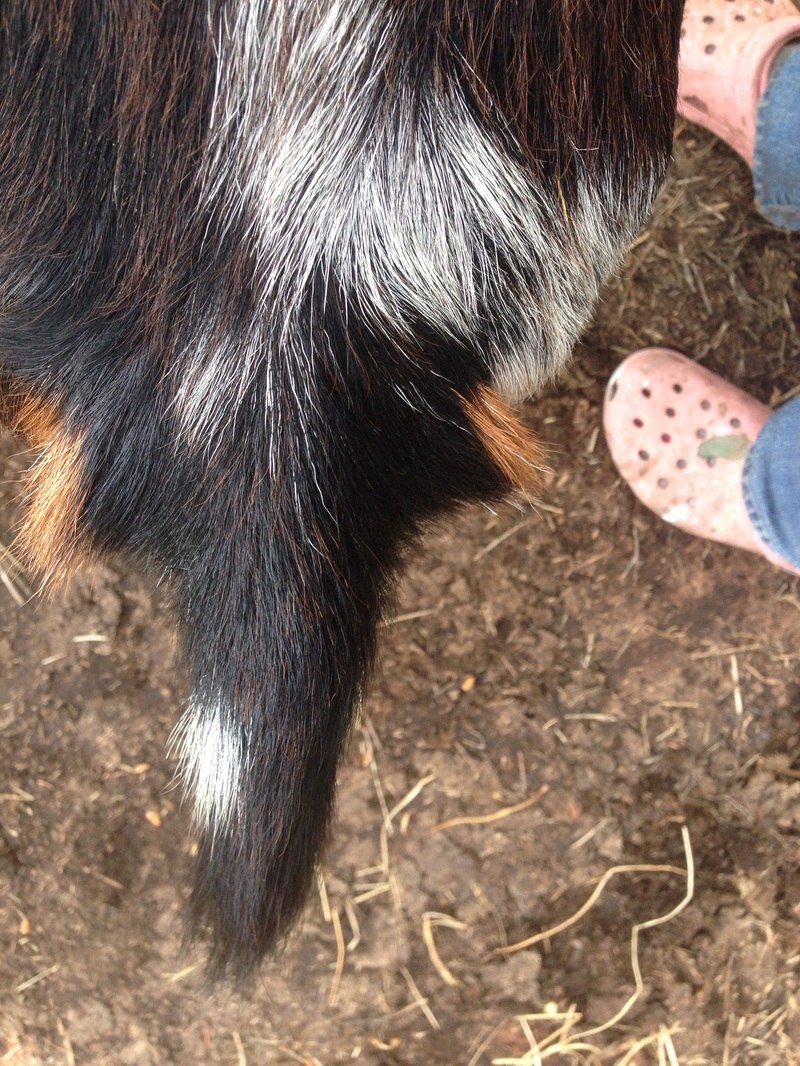
and her tail is growing full and fluffy again. Wonderful!
Last year I bought 2 Nubian does and a buckling from a goat dairy that was forced to close due to family problems. The goats were not very well, but were extremey friendly and good natured and I  really liked them. Unfortunately the episode turned into a very sad drama with the previous goat owner and all the Nubian kids, 11 of them died over the next few months. The vet was unable to help. It turned out they had worms so badly and they were not treated with something that was effective. They became too anemic and died. I cried for days. 

But the adults were stronger although they were deficient. Dory's coat was copper coloured and should have been black.Matty was not in as bad of shape. She is older, the grandmother of Dory as a matter of fact, but she has had a harder time gaining ground becuase of her age. It has taken an entire year and a lot of dedication to help these girls recover. Finally, Dory's coat is returning to her normal colour and the fishtails they had are growing hair again, both signs of recovery. Matty still has more needs, but they are out on bush forage for the rest of the summer and should be able to acquire the missing nutrients they neec. 

My aim is to breed them in the fall if they have recovered fully and to have two milk goats next year. They are trained to milk and will stand with no problem. Matty, the grandmother is much better than Dory, having had several years more practice. I love these goats and have worked hard to get them back to health. And they love me too. 
0 Comments

Feeder Number Six

2/27/2015

0 Comments

 
Picture
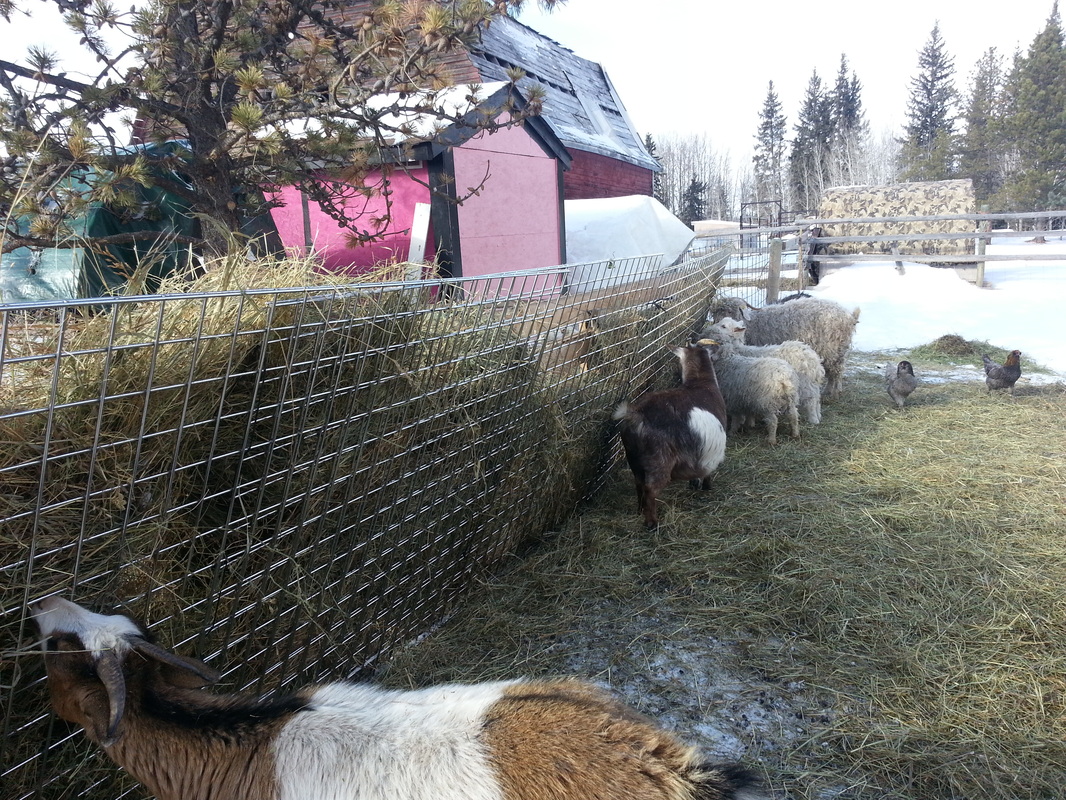
In an attempt to save hay and keep the sheep's coats free of vegetative matter, I am testing an idea. This is grid wall, the sort of panels that one would find in a store with many things hanging from them on special hooks. The panels are sturdy heavy guage wire, so the sheep and goats will not be able to bend them as they do fence wires. In this trial, I want to see if the critters are able to feed and not spill so much hay. In the current model, they are able to stick their heads in a vertical opening in the fence and select a mouthful. There are several problems inherent with that feeder. 

One is that the sheep and goats choose what they like the best, leaving the rest. 
Two is that they are able to pull a large mouthful from the feeder, despite the slanted slat openings, and in doing so, they drop hay on the ground. Once on the ground, it is not retrieved and becomes waste. 
Three is the waste hay still in the feeder has to be forked out every second day for sure. The sheep and goats feel they have eaten all they like and cry for more feed. In all fairness, they do not digest stems with high lignen content, so the hay left is usually coarse stems, but there is often a lot of good hay amongst the stems. For the goats, I have been removing the hay and using it for bedding in their barn and shelter and also putting it in a large container for them to sift through one more time before it becomes bedding. 
Four. The small size of the goat kids enables them to fit through the stlat openings in the feeder and enter the feeder. Then, of course they can select exactly what they want without competing for it. The problem is that they poop and pee on the hay, plus bring manure on their feet. This spreads worms if the others actually eat the soiled hay, but generally, once it is in such a state, it is totally wasted and not the little ones in the feeder or the big ones outside the feeder will touch it. 

Currently there is about 50% waste with the goats and slightly less with the sheep. Tomorrow I will see how the goats have done judging by how much hay is left in the feeder and how much is on the ground. if they have managed to eat the hay, then the next step is to build feeders. 

The feeders will be only 2 feet of this grid, put on a plywood tray to catch that which falls and the tray will be elevated from the ground about 18 inches. In one previous feeder trial, the problem with an elevated feeder was in the winter, the snow was much higher than the 18 inches and the feeder was frozen to the ground, so it was abandoned. I am not sure yet how to fix that problem. 

There are two groups of goats that have only been together for a week. The Nubians, though much larger than the Nigerian Dwarf does, are easily pushed around. The herd boss, Celia, runs around selecting what she wants and using her horns to move any of the goats out of her way. They now respect her and when they see her coming. they move. The gentle Nubians and the kids from last year do not eat when the other group of Nigerians are at the feeder, so they do not get the best feed. With this new grid system, the Nigerians cannot select morsels that are to their liking as much, and must take what they can get in the mouthful. 

I will try this for a week and monitor the progress. Hopefully it will solve the hay wasting problem, or at least reduce it immensely, especially once the tray is at the bottom to collect the waste. I fully expect kid goats and lambs to use the tray as a play area though and there is not much that can be done about it when the time comes. Besides, they are too cute to get upset with!
0 Comments

The Changeover

2/19/2015

0 Comments

 
The ram lambs were born in May through June of 2014. These seven little boys were weaned in October and were still very small, so they went in with the little goats kids and the two Nubian does for company and warmth. The Nubians and kids have a round granary as their barn and it does keep them totally out of the wind. With the 14 bodies in the barn, the temperature can be twenty degrees warmer than the outside. For night that have been especially cold this winter, the extra warmth provided by the sheep has been good for the goats and the lambs too. 

But goats and sheep do have different nutritional requirements. Goats are browsers and eat from the top down given their choice, whereas sheep are grazers and like short grass the best. They both eat weeds and the goats prefer tree leaves to grass. Good hay for the sheep and goats will have lots of natural weeds in it. But the does benefit from the extra protein and minerals in alfalfa, though for rams, it is too rich and sometimes the extra calcium can cause urinary calcuali, little calcium stones that must pass the urethra, a painful condition. Baking soda helps with that, but prevention is better, so now that the lambs are older, it was necessary to separate them. Goats require greater amounts of copper in their diets, but too much copper is harmful to some breeds of sheep, so the concern for feeding minerals and mineral salts is also there. 

Moving the ram lambs is always a process. They are not tame and friendly, but not wild. They have not been haltered, nor ever fed grain, so leading them with the lure of a grain bucket means nothing to them and haltering one is a process. The term "jumbuck" is a young lamb on a tether, likely originating from the jumping and bucking they do. My poor arm and shoulder muscles will never be the same. I moved the first that way and then my son devised a plan. I had already thought that plan through, but felt I could not execute it on my own. Since he was there to help, we put the ewes in the barn, then opened and closed several gates, and along with the border collie, Robbie, got the rest of the ram lambs into the other goat pen. The goats were then easy to lure out with a bucket of grain, since they all knew what that was and they followed me to the pen where the lambs left from, to be with the rest of the goats. 

Then war broke out. The two herd bosses, Cecelia, the Nygerian doe and Mattie, the Nubian doe, had words. Cecelia has horns and knows how to use them. She won. The herd is still divided and I have been feeding them separately and will continue to do so for the next while until they sort things out between themselves. I noticed the Nygerians were sleeping in the shelter, while the Nubians still had their barn. What I would like to see is all the goats in the barn. The Nygerians are pregnant, but the Nubians are not bred this year. 

And poor Raven, the lone little buck was left with the ram lambs and has gone hoarse crying for his girls. I will move him along with the two little bucklings when the weather warms up somewhat. Oh the fun with the critters never does end!
Picture
The ram lamb with the horns is in front of the litltle doeling, the white one and the cashmere doeling behind her, while Dori's spotted legs are to the right of him. Now the sheep are separated from the goats. Whew!
0 Comments
<<Previous

    Categories

    All
    Airstream Land Yacht 1964
    Alpacas
    Alpine Goats
    Ameraucana Chickens
    American Buff Geese
    Ancona Ducks
    Angora Goats
    Angora Goats
    Angora Rabbits.
    Babydoll Southdown Sheep
    Babydoll Southdown Sheep
    Bed And Breakfast
    Berkshire Pigs
    Blue Faced Leicester Sheep
    Blue Swedish Ducks
    Boer Goats
    Border Collie
    Border Collie
    Bronze Turkey (Standard)
    Bronze Turkey Standard
    Canadian Horses
    Canadian Horses
    Cats
    Chickens
    Cotswold Sheep
    Crafts And Hobbies
    Cream Legbar Chickens
    Dorset Sheep
    Ducks
    Embden Geese
    E'st A Laine Merino Sheep
    Farm Life
    Farm Life
    Farm Store
    Finnsheep
    Flemish Giant Rabbit
    Flowers
    French Lop Rabbit
    Galloway Cattles
    Gardening
    Gotland Sheep
    Guinea Fowl
    Herbs
    Holstein Steer
    Icelandic Sheep
    Jacob Sheep
    Japanese Bantam Chickens
    Jersey Cow
    Kahaki Campbell Ducks
    Karakul Sheep
    Kiko Goats
    Kilo Highland Cows
    Light Sussex Chicken
    Livestock Guardian Dogs
    Livestock Guardian Dogs
    Maremma Sheepdogs
    Maremma Sheepdogs
    Meishan Pigs
    Miniature Nigerian Dwarf Goats
    Moose Hills Inn
    Muscovy Ducks
    Norwegian Red Dairy Cow
    Nubian Goats
    Nygora Goat
    Ossabaw Hogs
    Partidge Chantecler Chickens
    Pekin Ducks
    Permaculture
    Pied Guinea Fowl
    Polish/Ameraucana Bantam Cross Chickens
    Polled Dorset Sheep
    Potbelly Pigs
    Pygmy Goats
    Recipes
    Rigit Galloway Cows.
    Romanov Sheep
    Romney Sheep
    Rouen Ducks
    Saddleback Pomeranican Geese
    Saxony Ducks
    Sebastopol Geese
    Sheep And Goats
    Shetland Sheep
    Silver Spangled Hamburg Chicken
    Soap And Hand Made Cosmetics
    Standard Jack Donkey
    Sustainability
    Swiss Blackneck Goats
    The Llamas
    The Llamas
    Toulouse Geese
    Tunis Sheep
    White Chantecler Chickens
    White Danish Geese
    Wool

    Author

    Fluffy writes daily about the experiences on the farm and with the bed and breakfast patrons. 

    Archives

    October 2020
    September 2019
    June 2019
    March 2019
    January 2019
    November 2018
    December 2017
    November 2017
    October 2017
    September 2017
    August 2017
    July 2017
    June 2017
    May 2017
    April 2017
    March 2017
    February 2017
    January 2017
    December 2016
    November 2016
    October 2016
    September 2016
    August 2016
    July 2016
    June 2016
    May 2016
    April 2016
    March 2016
    February 2016
    January 2016
    December 2015
    November 2015
    October 2015
    September 2015
    August 2015
    July 2015
    June 2015
    May 2015
    April 2015
    March 2015
    February 2015
    January 2015
    December 2014
    November 2014
    October 2014
    September 2014
    August 2014
    July 2014
    June 2014
    May 2014
    April 2014
    March 2014
    February 2014
    January 2014
    December 2013
    November 2013
    October 2013
    September 2013
    August 2013
    July 2013
    June 2013
    May 2013
    April 2013
    March 2013
    February 2013
    January 2013

    view old blog site

    RSS Feed

Powered by Create your own unique website with customizable templates.