The Fat Ewe Farm and Bed and Breakfast
The Fat Ewe Farm and Moose Hills Inn
Organic Permaculture Farmin' for
the Lazy Ewes
  • The Fat Ewe Farm
  • About Us
  • Blog
  • The Fat Ewe Farm Store
  • Livestock Breeds (click here to see all the breeds)
    • Angora goats
    • Icelandic Sheep
    • Jacob sheep
    • Old English Southdown Babydoll Sheep >
      • Babydoll Sheep on the Fat Ewe Farm
  • Contact Us
    • Photo Gallery (click here for some awesome photos or watch the slideshow) >
      • Video Slide Show
    • Phone Number
    • Map
  • Sale Barn
  • Recipes From the Fat Ewe
    • Old Stuff
  • How Much Meat Do You Get?
  • Ukrainian Easter Eggs
  • Moose Hills Inn

Waterfowl in Winter

11/15/2014

1 Comment

 
Picture
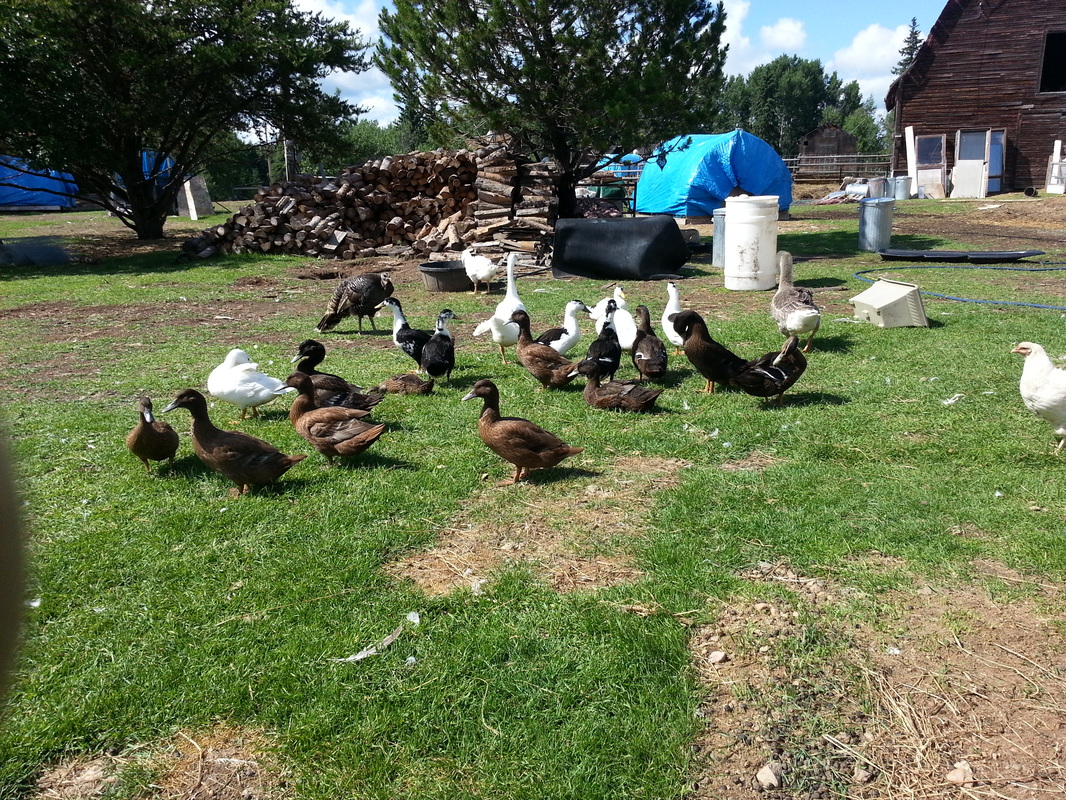
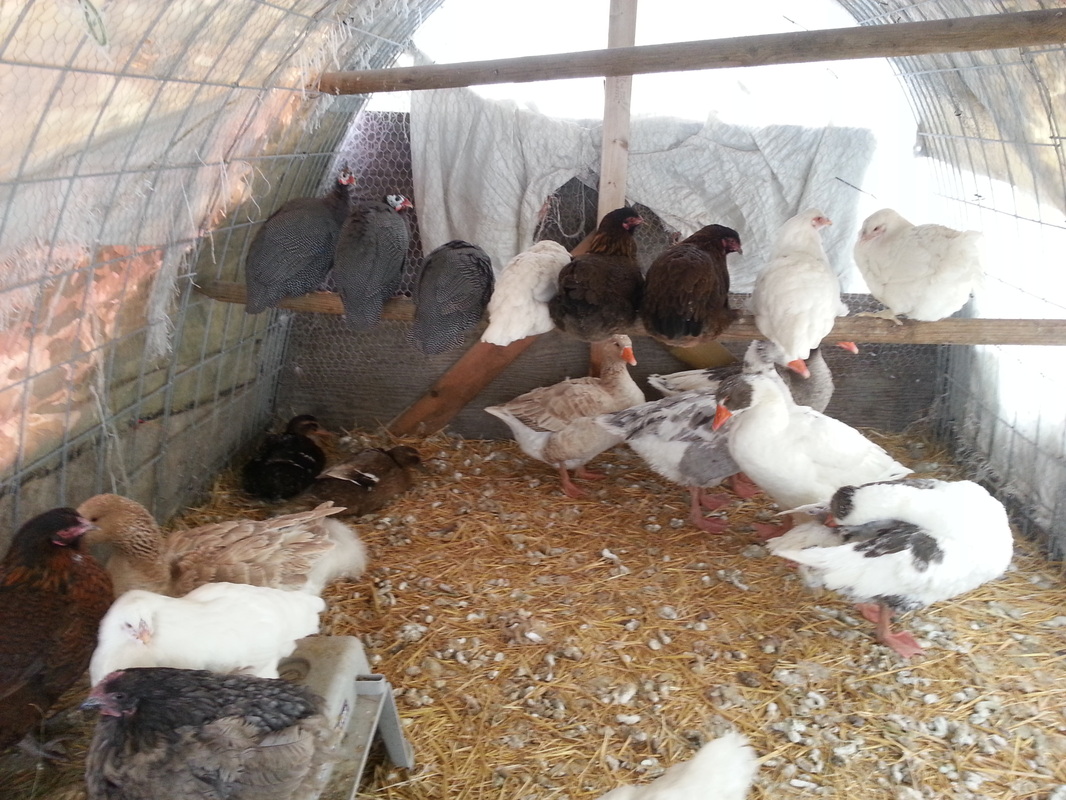
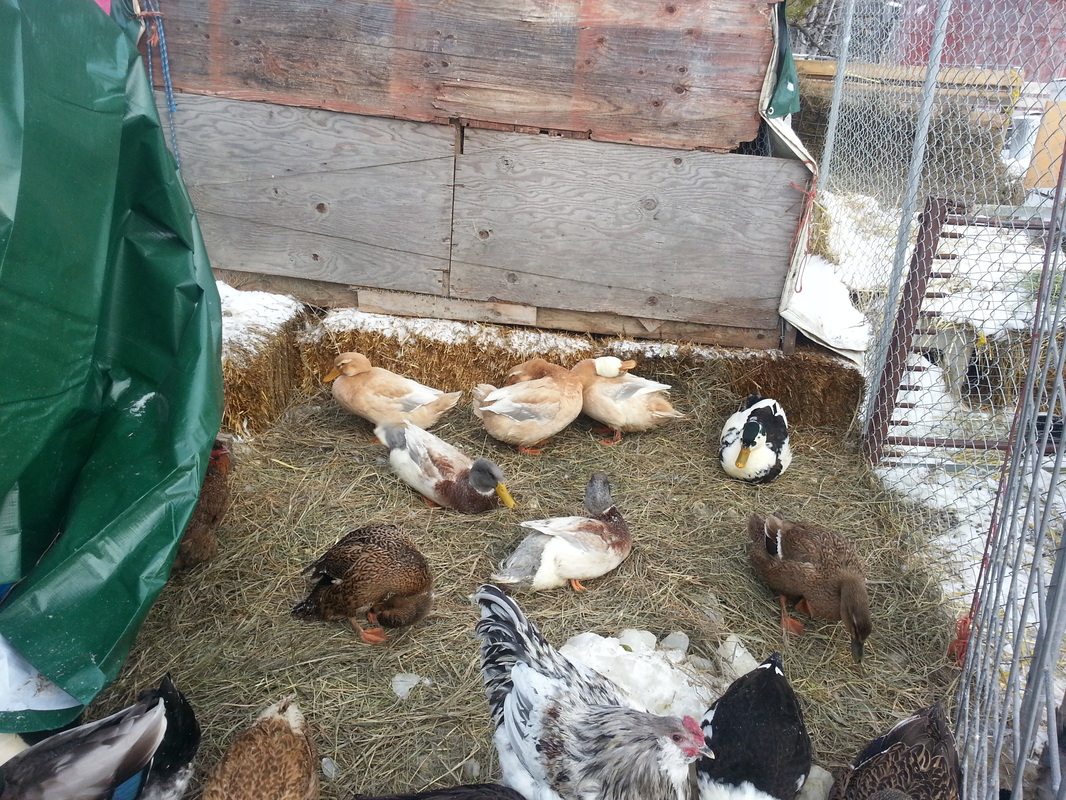
The blonde ducks near the wall at the back and the two drakes right in front of them are the Saxony ducks. How they know each other is beyond me, but they do.
Picture
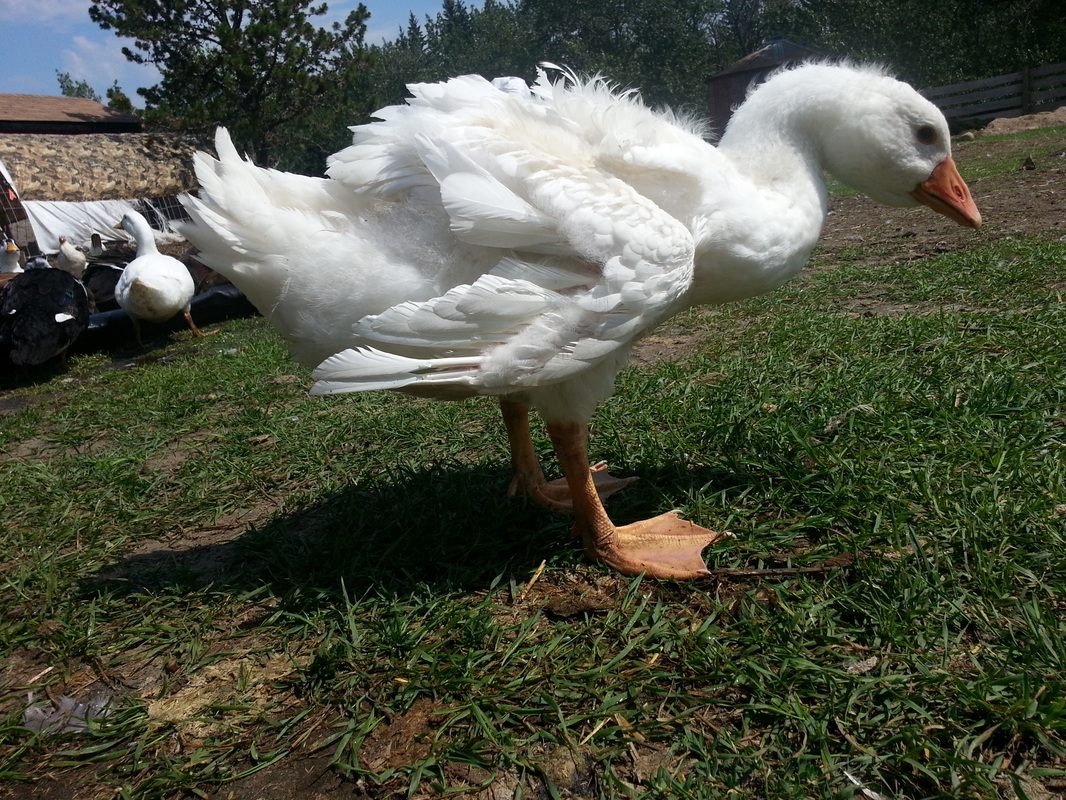
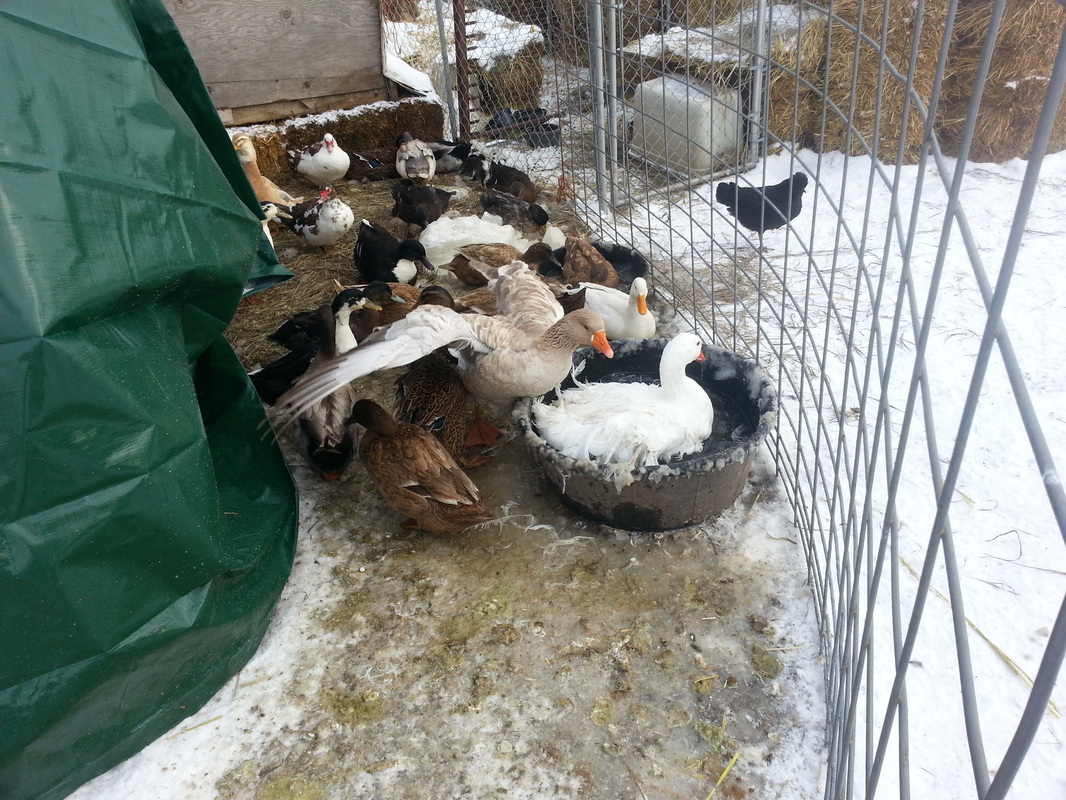
The Sebastopol feathers (the white goose) get wetter than the American Buff and I worry they will get cold.
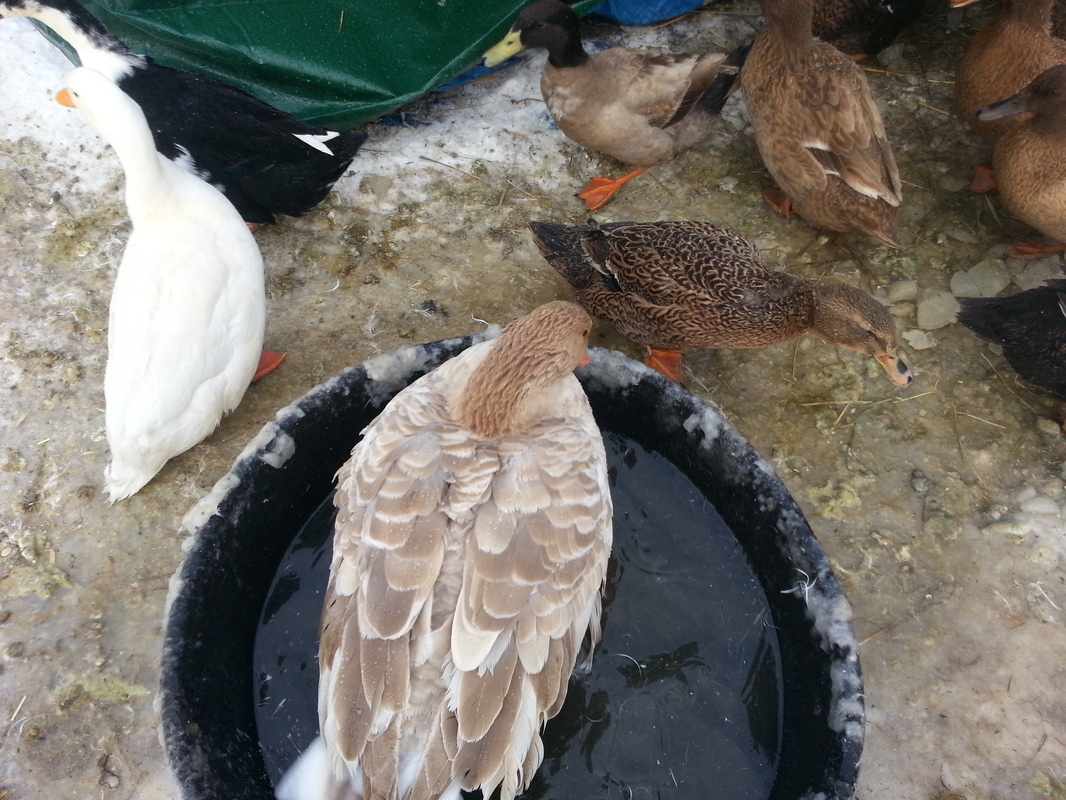
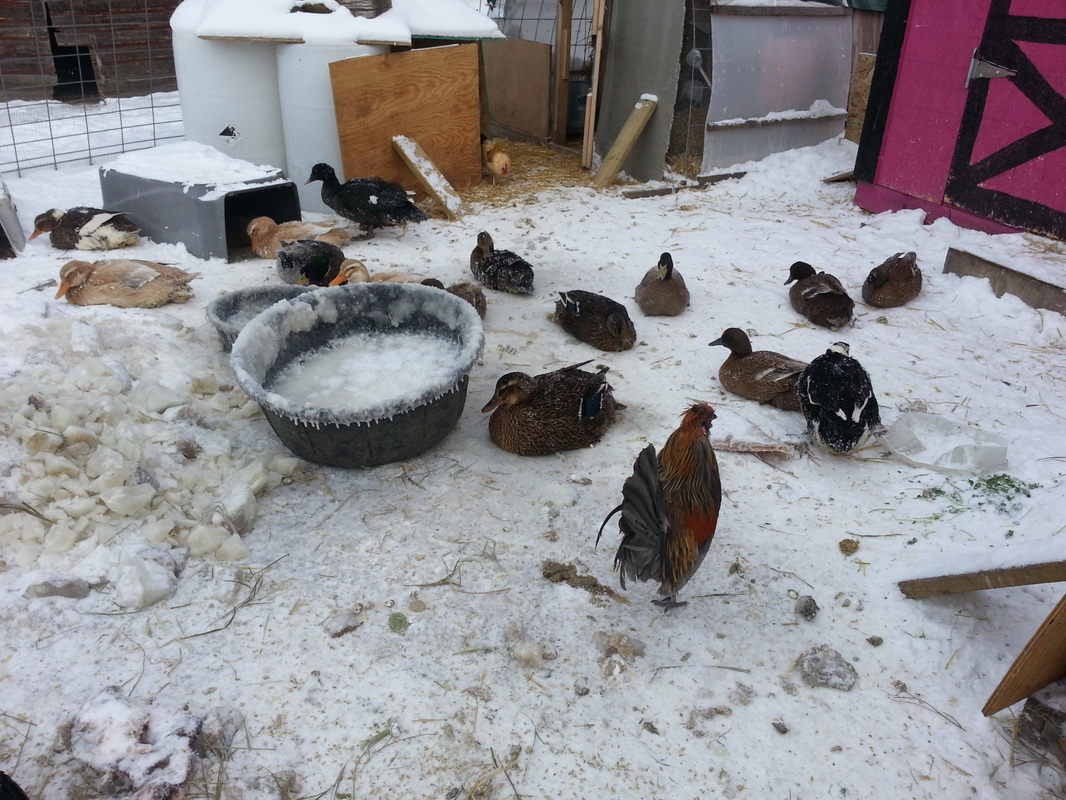
PictureYou can see the ice on the tub edge already. In a bit the feathers of the American Buff goose will look the same.
It took a while for me to research enough to be comfortable raising waterfowl through a northern Alberta winter. For one, I do not have heated coops. Also, I do not have an underground water system or a system that keeps water from freezing. So, for the ducks and geese, it was still important that they had access to fresh water daily so they could dip their heads in to clear their eyes, but they also like to bathe daily, despite the frigid temperatures. 

The ducks and geese go into their tubs and flick the water over thier backs, wetting the feathers. Then they sit for an hour afterwards and preen. This means that they spread the oil from their oil gland near the tail, with their beaks, through out the feathers. The oil helps to unify the feathers and then keep the birds warmer. This seems counterproductive when the tempatures are so low that immediately upon leaving the water, it freezes to ice on their feathers, but it does work. 

The ducks prefer to be outside during the day and do not require too much shelter, just a place away from the wind and off the cold ground, with a roof to keep the snow off too. Bi weekly, or as needed, I spread some fluffy straw on the floor of their shelters. The birds tuck their legs and feet up into their sides though and rest on their breasts, which are amply covered with feathers and underneath those, a beautiful layer of fine down. The water actually does not penetrate their feathers if they are in good condition. 

The Sebastopol geese worry me though. They have open feathers and not much down in comparison to the other geese, yet they love to bathe just the same. They also sit and preen and are not shivering, so I assume they are not cold, but they do not have the insulation against the cold that other geese do. Fortunately, the ducks and geese crowd themselves into an 8 x 10 shelter, so their body heat does keep the shelter warmer and the proximity to each other keeps the birds warmer too. It is always nice to cuddle up to a buddy. 

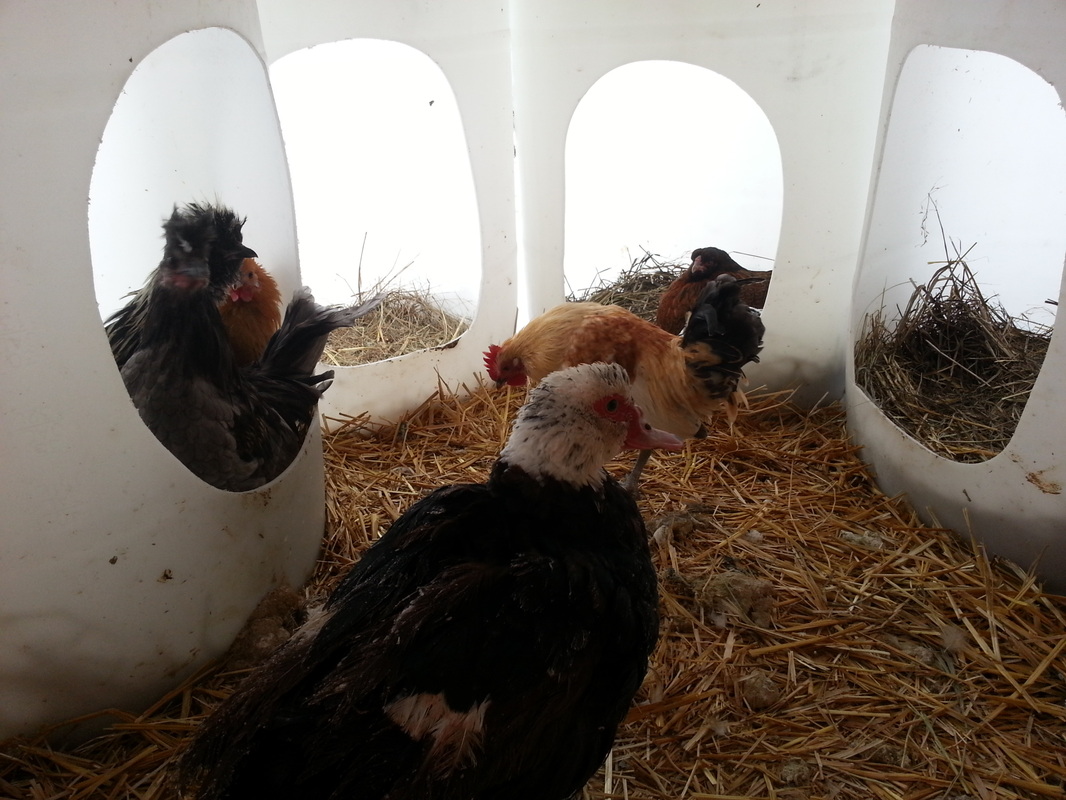
The Muscovy ducks do not sleep with the other waterfowl and instead, go into one of the chicken coops. The body temperature of chickens is higher than ducks and in that coop there are a lot of them, so perhaps it feels warmer to the Muscovy ducks. The caruncles, or red raised bits on their faces, can freeze and if they do, it means that they could get brain freeze too, in which case, death would result. Today they all got new straw in their coops and they had their daily baths too. I could stand and watch them for a long time, I find them so interesting. But when the temperature is well below zero and the wind is blowing, standing to watch is not really a good option. 

Another thing I do not comprehend is how they know each other. The Saxony ducks, three girls, got two Saxony drakes recently. I did not segregate them to introduce the drakes to the girls, but some how they know who is who and they hang around together. I see that when mating occurs in the spring too. The Rouens hang around together and the Campbells too, and now the Saxony ducks will likely too. Pretty cool things, those birds. Aren't they?
1 Comment

A Lot of Little Ducks and One Chick

7/18/2014

0 Comments

 
Picture
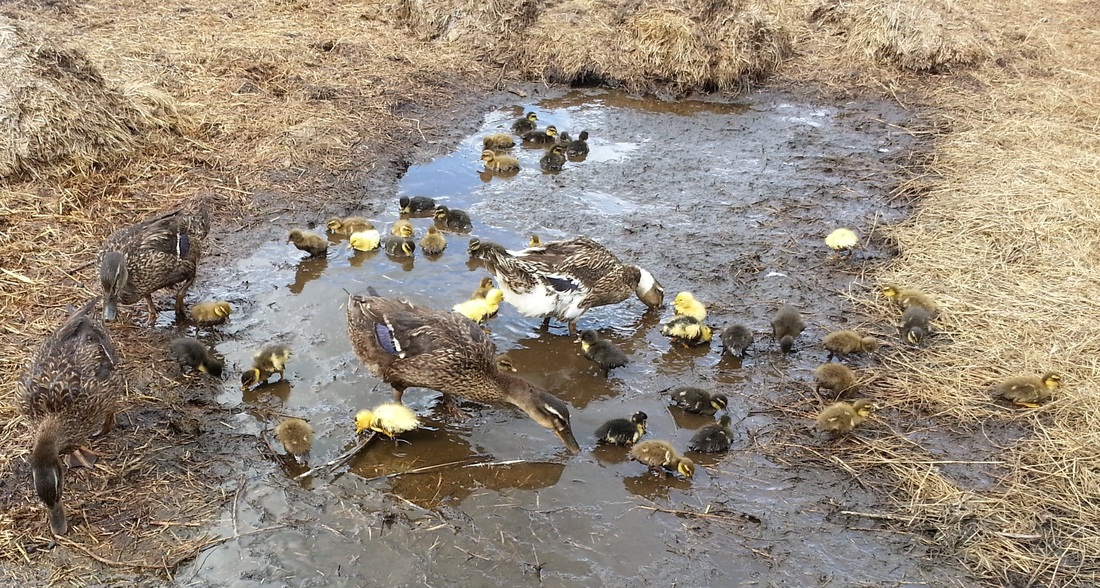
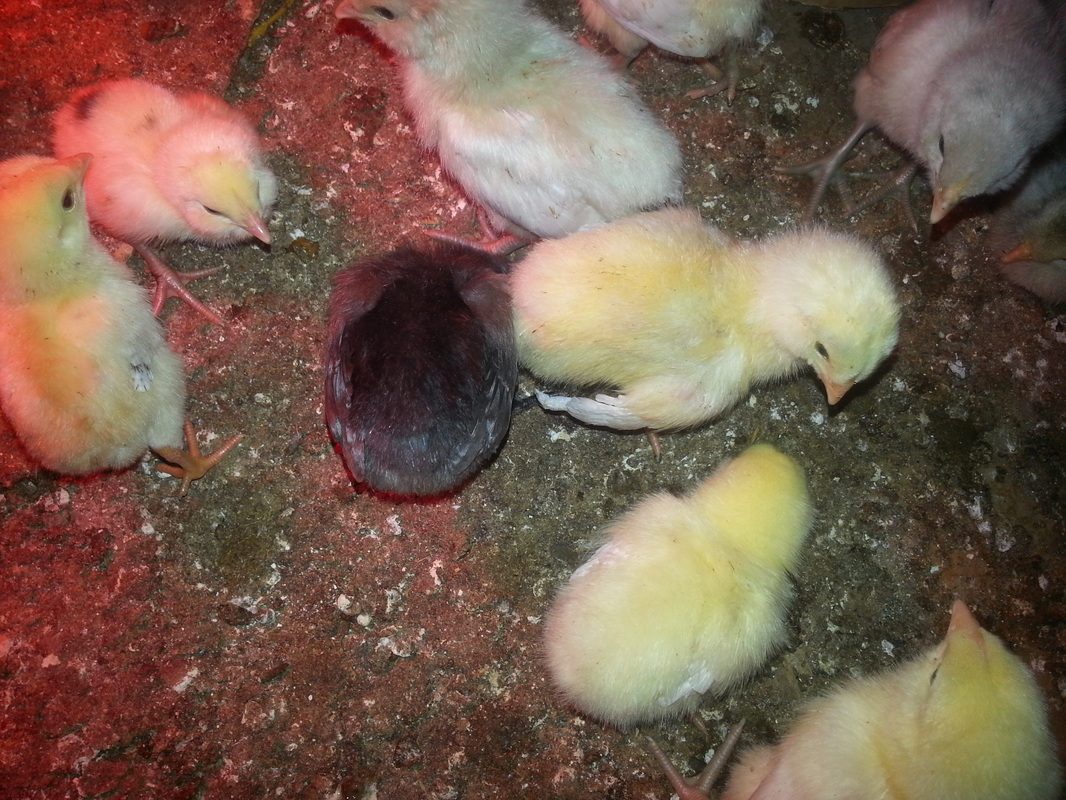
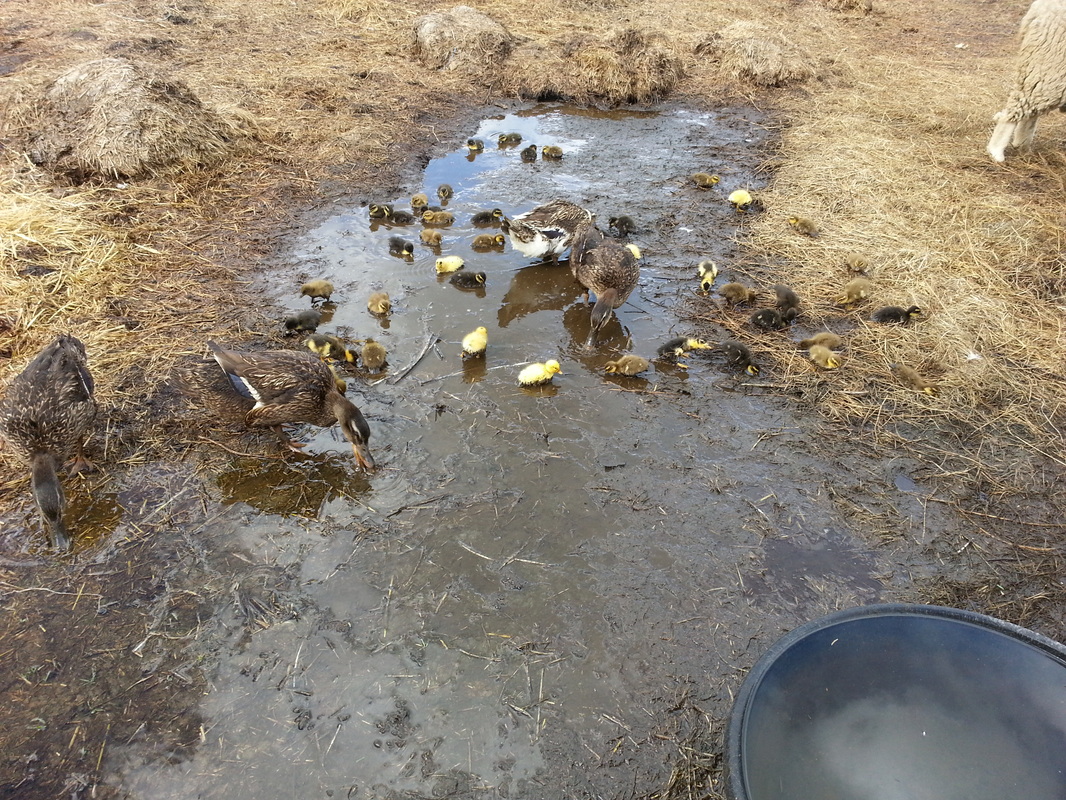
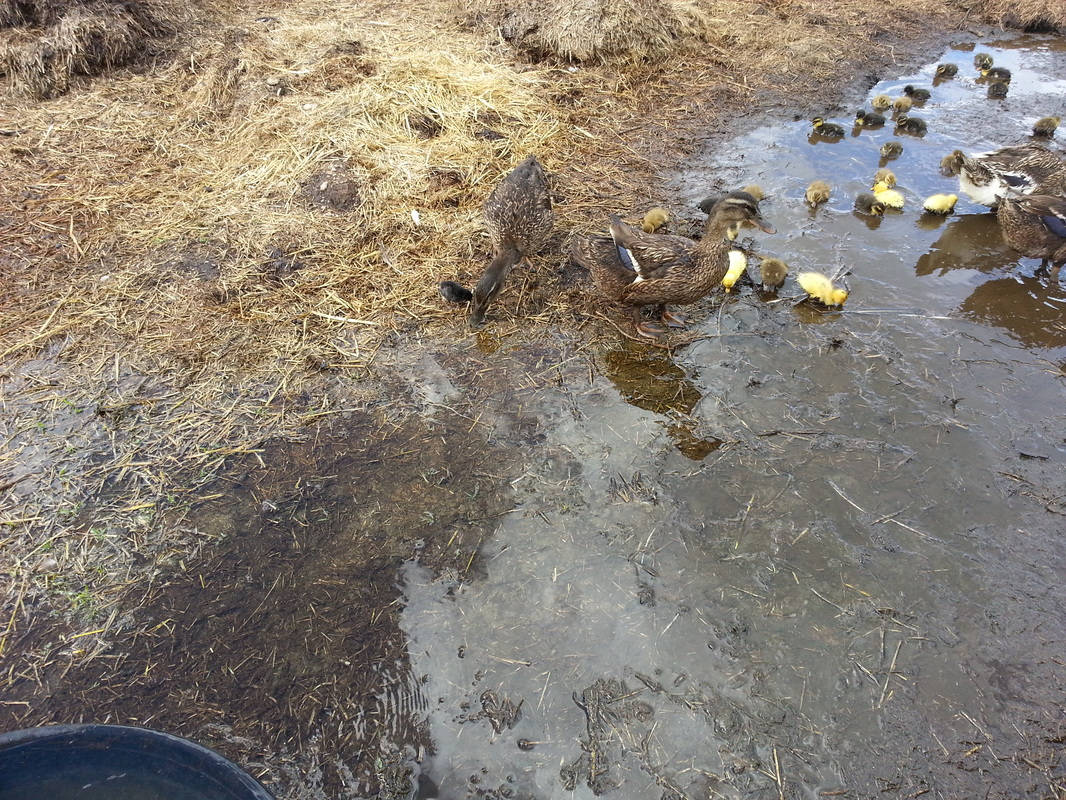
Four Rouen hens, well, three because one is a Rouen cross, sat on four nests and hatched forty something ducklings and one chick, a a little black bantam, most likely a rooster because it is all over the place faster than a lightening bolt. I don't know how it will survive because duck moms do not stop to warm their babies very much, not as much as chicks require. It is a few days older than the ducklings, which will help. Can you spot it?
Picture
The chick is on the left of the left Rouen duck. The mamma duck does not understand why the chick doesn't want to go in the water.
Picture
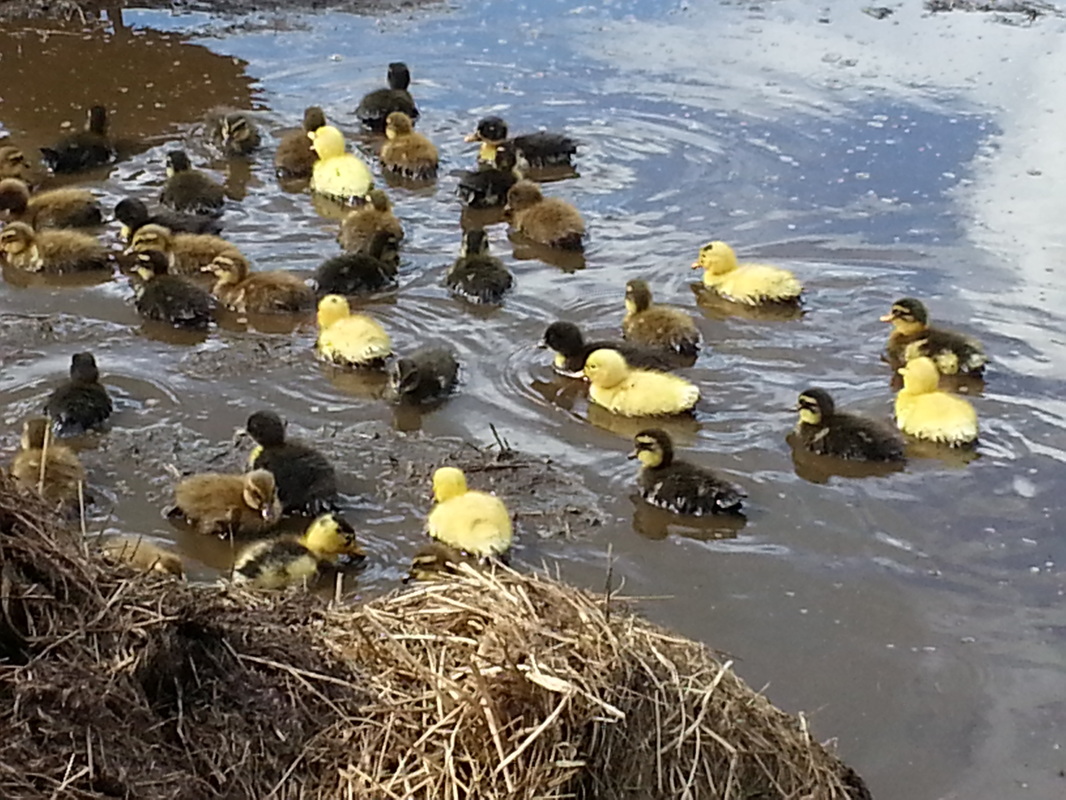
The ducklings are Saxony, Khaki Campbell, Rouen and Ancona and crosses of those breeds, plus white Khaki Campbells, which are quite rare.
Picture
the all yellow ducklings will be pure white and are most likely Khaki Campbells. The yellow with black are Anconas, the light fawn are Khaki Campbells and the dark ones with eye stripes are Rouens, but there are also Saxony mixes in the bunch. There is not Saxony drake present at this time, but three ducks do live on the farm. Welcome little buddies.
0 Comments

The Ducks and Getting Big

7/5/2014

0 Comments

 
Picture
The ducklings and goslings hatched in the incubator earlier in spring are now almost full grown adults. It is possible to tell the difference between the sexes too. The male ducks have a distinct green tinge to their bills, while the females have plain orange, brown or mottled bills, depending on the breed or cross. The males will also develop a curl in their tail feathers fairly soon, but for now, they can be sexed. There are about half and half it appears. Most of these girls will stay on the farm since their moms are now three years old and their laying will decrease considerably next year and the subsequent years. The Khaki Campbell ducks will lay from early in the spring, even with snow on the ground and freezing temperatures, right through until the late fall, and possibly the start of winter. The other ducks, Saxony, Rouen and Ancona, will lay more sporadically now until fall. The only gosling hatched from the farm is a very large gander, mostly grey in colour. He is already protecting his flock. The white Chinese gosling belongs to a friend and was a sole hatchling, so has come to live on the farm for now. The poor fellow has a genetic defect resulting in dropped wings, called angel wing. Since he was fed just the same as the rest of the ducklings and the three other goslings, it was not likely a deficiency that caused the problem, because no others display any abnormalities at all. Well, that is not entirely so. One Rouen was hatched with wry neck, a twist in the neck that inhibits proper eating and drinking and is very tiresome. Although I was advised to do away with him, he has been given the chance to survive and do his best to keep up with the flock. 

The pure white Sebastopols are becoming quite stunning with their fluffy feathers. The goose comes to me and tells me stories. I picked her up today and she protested loudly bringing the gander over to investigate. Then she calmed down and laid her beautiful head on my arm. Ah, the goslings and ducklings are wonderful creatures. They really are. 
Picture
0 Comments

Quiet Hot Day on the Farm

6/27/2014

0 Comments

 
Picture
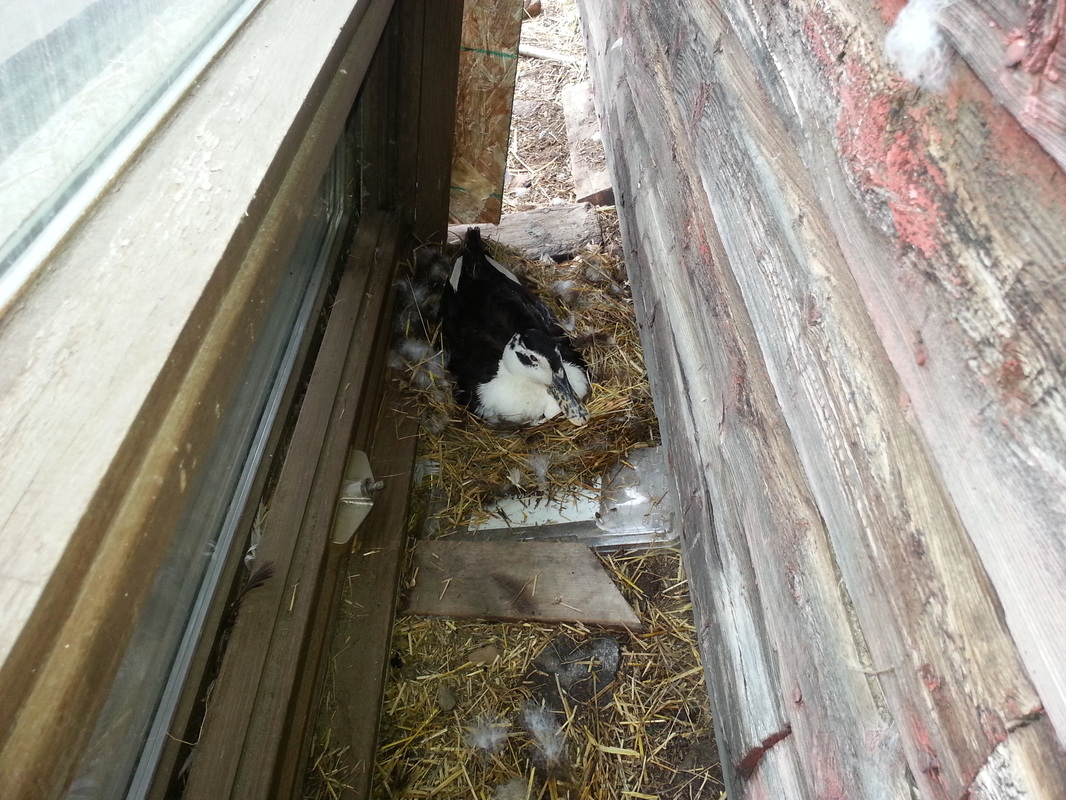
Annie Ancona on her nest behind some used windows. That would have been a very hot spot on a day such as today was, poor girl.
After so much rain for the past month, with the ground being muddy soup everywhere and the mosquitos and flies more prevalent because they can breed so quickly, today was a sunny day, finally. But it was super hot, 27 degrees Celcius, or almost 81 degrees Fernheit. The heat was one thing, but the humidity was the other. 

After the morning chores I settled down for coffee and breakfast, though breakfast never really arrived. I could hear a little kid goat crying and crying and the goats had been getting through the old fence in the weak spots, so I thought I should investigate. Sure enough, they had busted through again. An old tree had fallen on the wire giving them a clear path to the other side where it is always better than the side they are supposed to be on. 

So, I heaved and hoed and finally moved the log, pulled the wire up, got a stick and propped it up like a post to rest the wire on and went back inside. But that kid kept crying and I went out to find him. He was stuck on the right side of the fence this time because the goats that were out were ushered through the main gate and back to their pen leaving him behind. Robbie and I went in the bush and led him back to where he could find his way home. Kids these days, really. 

I went back in to have breakfast and realized I had not seen Georgie, the crippled lamb, go out with the rest, so we went to look for her. She was nowhere in sight and I hoped she would be found by night, but Robbie and I searched the bush, especially where we found her last night, and had no luck. Poor Georgie. Wherever she is, I hope she makes it through until morning. There are many predators in the woods and the dogs do their best, but she cannot run at all, so would not fare well. Bless you little sweetheart baby girl. Stay safe until morning light. 

I went out to do a little gardening, however the humidity was unbearable and sweat was pouring off me. Staying in the sun was not an option. I got two rows of mulching done and decided to go inside. I had long given up on breakfast and decided two fresh mangos from the case I bought yesterday would be a tasty treat. 

I answered some emails and did not too much for a while during the hottest part of the day, went out and cleaned the water bowls and refilled them. The ducks and geese foul the water as soon as it is poured and the goats especially do not like to drink dirty water. There are 5 ducks sitting on nests and a Saxony building one that already has 7 eggs, so soon to be 6 sitting ducks. The Ancona built a nest and began her sojourn today and the Rouen ladies began several days previously. I don't think the Saxony is far behind. That will be a lot of ducklings, if they all survive. Something has been picking off the goslings, the raven perhaps, so we are down to 14 from 28, half. The other Muscovy duck not sitting has her nest ready to go and is all huffy, but I gave her 14 Guinea eggs to hatch because there are plenty of ducklings already under way, including the other two Muscovies who are sitting on their own eggs. 

It was  a quiet hot and muggy day with not much production, but some days are just like that. Now, time to hit the hay. Goodnight and Bless you all. Sweet dreams. 
0 Comments

The Last of the Hatch

5/17/2014

0 Comments

 
Picture
Gosh ducklings and goslings are cute! The last of the hatch was out today, with just a few goose eggs to go. The eggs were collected early in spring when the temperatures were still very low and although they were likely fertile, they were not viable. The ducks laid in their shelter and the chickens in their nesting boxes, but the geese were laying outside in makeshift nests. Unfortunately, most of the eggs got chilled and only two geese out of 50 eggs hatched. There are four geese setting now though, and each has a dozen or more eggs, so most likely, many of those eggs will hatch. The geese adults all care for and protect the young goslings. Last year, the gaggle raised 5 mom hatched little gaffers and they all went into the freezer. This year, if the eggs all hatch, which is not likely, but possible, there will be more than 40 goslings. It will be more difficult to protect the babies from arial predators, particularly the ravens. I am not sure how to handle that, not wanting to lose the young ones, but at the same time, wanting to allow the gaggle to look after and raise their babies. Only Robbie, the border collie, chases the ravens off. The other livestock guardian dogs do not much bother with them, unfortunately. 

Two goose eggs pipped, that is the baby broke through the shell, but they have been in the shells too long now, and likely will die in the shell. It is usually not a good idea to liberate the hatchlings either, since they often die shortly after, especially if they are stuck to the shell or membrane and bleed from being released. There are a dozen more goose eggs still in the incubator due in a few days. Then hatching is pretty much over for this year. A hundred chicks and about 25 ducklings, plus 5 turkeys made it, and so far, just two little goslings. They are all living in the granary aka brooder house with two heat lamps (in case one light burns out in the night or anything else ). During the day, if it is good weather, the granary door is open with a wire cover in place to keep cats and ravens out, so the birds can get some fresh air and see outside. In a few weeks they will be transferred to separate pens, one for the waterfowl and the other for the chicks and turkeys. There they will remain until they are well on their way to adult hood and have gained the ability to fend off predators and watch for themselves, usually about at four months old. The males will be sent off to the processor at five months, and the females sold as laying hens or kept for breeding stock and laying hens for the farm. Then next year, the cycle will go on. That is the way of the hatch. 

0 Comments

Chicks, Ducklings and Turkey Poults, Oh My!

5/13/2014

0 Comments

 
Picture
There are over 100 chicks, 4 turkey poults and about 20 ducklings in the brooder so far. Tomorrow the ducklings need to be separated because they use up all the water and make such a big mess, it just isn't fair to the chicks. The turkey poults do not know how to eat or drink on their own and that is something, when the turkey mother hatches her eggs, she teaches the babies to do. Otherwise, they must learn on their own from watching the chicks or if they are by themselves, their human caretaker must show them by giving them the food and taking them to the water and dipping their beaks into it. It is so much easier when the mothers hatch their babies and care for them, and the babies are so much smarter. Last year, I carefully observed newly hatched chicks. The mothers took them around the barn yard, showing them what food was good, how to drink water and when they got cold, she called them to her and brooded them right where they were. In the first week, the young ones cannot regulate their own temperature yet, and need to be very warm, so the mother broods them very often, but they also are out and about and running over and under grasses and straw. Humans tend to coddle the chicks, not giving them straw, thinking it will cause their legs to splay, but in the real world, they are everywhere. The better mothers watch their babies closely and defend them fiercely. No one dare get too close or she will rush at the intruder and peck hard and scratch and puff herself up to appear a ferocious as she is acting. Human raised chicks miss all that fun. These babies will live in the granary brooder for a month, then be transferred to a hoop coop with a heat lamp in the corner. There they can experience the sunshine and fresh air and learn how to cope with the wind. Some will be kept to breed next year, but most, if not sold, will be put into the freezer for delicious meals in the winter. Their lives are honoured though, and they are loved and appreciated very much. Thank you little feathered friends, thank you so much. 

0 Comments

April 19th, 2014

4/18/2014

0 Comments

 
Picture
The first hatch is underway. The cost of keeping birds is much less than buying hay for sheep and goats, and the eggs, chicks and adult bird sales far outweigh their upkeep. That is not so with the other animals on the farm, but at least something breaks even!
The incubators are not mine, but belong to two different friends. I am splitting the hatch with one friend and the other gets his pick of the birds, so it is a win win situation for me and for them. About 40 mixed duck eggs, Rouen, Saxony, Ancona and Khaki Campbell, plus Muscovy, and 15 Standard Bronze turkey eggs, 18 mixed geese, Tufted Toulouse/Embden/Pomeranian, and chicken, Ameraucana/Partridge and white Chantecler and a few others plus bantams are all in the incubator with the chicks due on April 26 and the waterfowl on May 3 and 5. Muscovy ducks take the longest to hatch, followed by the geese then ducks and chicks the shortest, at 21 days. Some of the hatch has been presold already. About the same time, or a bit later, the farm will be receiving an order from Performance Poultry with specialty birds so there will be waterfowl and chick brooders set up and ready to go. Three separate hatches will be made, with approximately 80 eggs per hatch. After that, if there is still interest, the hatch will be set by order only. Unclaimed birds will be raised and either sent to the processors or kept for layers or for sale as adult birds. In the summer the feed bill is very low because the birds free range and basically feed themselves. This year, the numbers of adult birds are too high for the small farm yard, so they will out to pasture with the sheep so the dogs can also watch over them. With the new fencing, it will be easier to pasture the birds. The fliers go where they wish anyhow, so basically it is the ducks and geese and a few of the chickens that will need supplemental grazing. The benefits of raising the birds are many from fresh pastured eggs to bug control to delicious dinners. And to think that when I began this venture three years ago, I had a terrible bird phobia and could not touch a bird, not even a newly hatched chick, let alone go in a coop. Now I can, though the odd time, I still get prickles on the back of my neck when the birds fly by my head. I actually like them now, especially the comical ducks. They are my favourites, hands down. The egg pictured is from a Standard Bronze turkey, and I even like them. 

0 Comments

Spring Has Sprung

3/11/2014

0 Comments

 
Picture
If there is one thing that ducks love, it is water and with the warm temperatures, the snow is turning into puddles. The ducks love that! They are in their glory splashing  and dunking and playing in the water, but today, they were able to get some mud at the bottom, so they were extra ecstatic.
The big Rouen drake was out taking his ladies for a walk about. There were puddles everywhere to their absolute delight and of course, they sampled them all. The geese decided to venture further and went out to the driveway on the other side of the fence, but the snow has not turned into puddles there yet, so they ambled back. The goose sold as the male Saddleback Pomeranian is female and one of the females is a male. That was quit evident today, because geese love to mate in shallow water. The gander from last year did not want to share any of the ladies, though, and quickly turfed the newcomer out. The one that was supposed to be the gander is nesting, but she will have to relocate because where she wants to be is not a safe place out of the elements. In a few days, the barrel nests will be able to be moved and she will have a great place to lay her eggs and have little ones. It is so wonderful to enjoy the warm temperatures after that bitterly cold winter. Yup, spring has sprung.

0 Comments

Ducks

1/2/2014

0 Comments

 
PictureA Saxony hen on the left and Khaki Campbell on the right vying for the hot tub.
I absolutely LOVE the ducks! For hours on end, I can stand and watch them conversing with each other, scolding, picking, fighting, waddling and bathing. Bathing in winter is particularly interesting. I do not give them much water when it is cold, only a bucket in which they can dip their whole heads in to clear their eyes, which is mandatory, and a small, shallow pan, which was supposed to be for the chickens. The geese and ducks will go to the bucket and dip their heads in, flapping their wings as though they were in a shallow pool, and spread the water by throwing it onto their feathers. Of course, in these frigid temperatures, the water freezes instantly. This is not bad though. The ducks and geese will then spend an hour preening, that is spreading the oil from a gland through their feathers, which further waterproofs and weatherproofs them. They are well insulated and can lay on the ice and snow if they tuck their feet up into their feathers, which they do. The feet of the waterfowl are more sensitive to the cold, it seems, than the chickens, though neither like the very cold weather.

The Fat Ewe Farm has some interesting rare breeds of ducks. Of 11 ducklings purchased in the summer, only one female Ancona remains. The Ancona is a black and white duck, somewhat flighty and crazy, but absolutely the best foraging duck on the farm. I would like to try a few Runner ducks, one of the breeds from which the Ancona was derived to compare their foraging abilities, but more so, I would like to find a mate for the Ancona duck and see if I can raise some of these amazing little critters.

There are three Saxony ducks but no drake there either. The Saxony is a pretty buff coloured duck with buff and white eye stripes. They lay eggs well from early spring to very late fall and are larger than many duck breeds, so make a nice table duck. I am searching for a non related Saxony drake for the spring.

The Rouen is coloured as the wild Mallard from which it is derived, though it is a very large duck. They lay a great deal of eggs and are good at feeding themselves if given the opportunity. There are three ducks and drake of the Rouen breed.

Khaki Campbell ducks were my first experience with waterfowl and I really loved them. They are crazy skitterish and will fall all over themselves to get away from me, but when I am not moving towards them, they will also come and see what I have and run all over my feet. They detest being picked up and so far, I have not tamed a single one. The second year, a duck got injured and was secluded. She nested and hatched 8 babies, and that is rare for Khaki Campbells. Maybe the secret is to sequester them away so they desire to set the nest rather than run and play. The Campbells were bred to lay eggs, and that they do extremely well.

There are some other ducks living at The Fat Ewe Farm, but they are crosses from the ducks here, mostly Rouen, Campbell crosses and only the females are here, about five of them. I would love to try the Dutch Hookbill, Blue Swedish, and Aylesbury, the finest table duck ever bred, along with some Runner ducks. That will be a project for the summer, to try to locate pairs of these.

Oh yeah, there are also four Muscovy ducks. These are large flighted ducks from South America originally, well, not these particular ones, but the breed is. They do not quack or make noise, but rather make a funny sound like a person with harsh laryngitis. They do not like the cold and do not far as well as the ducks descended from the Mallards, which is basically the rest of the ducks. There are three ducks and one summer baby that appears to be male. Muscovy ducks are constantly broody even at the sake of their own health. Last summer one duck spent three months under buildings trying to hatch ducklings. Finally, I tore up the nest and threw the eggs away, which were long overdue and bad, and she was locked up with the rest of the ducks. Muscovies will hatch the eggs of any duck or chicken though, so they are very valuable that way, plus they are supposedly tasty with very dark meat, but I have not eaten one.

Duck eggs are three times more nutritious than chicken eggs and when they are plentiful, I won't touch the chicken eggs. They just do not compare. The ducks are fed minimal grain in the summer and have the run of the farm yard to eat grass, which they a lot of, dandelions, their favourites and bugs, flies and even the odd young mouse of vole. I am looking into alternatives for not feeding grain to the birds at the Fat Ewe , but I am not sure yet how that will work. In the meantime, I love those duckies! They put a smile on my face every time.

Picture
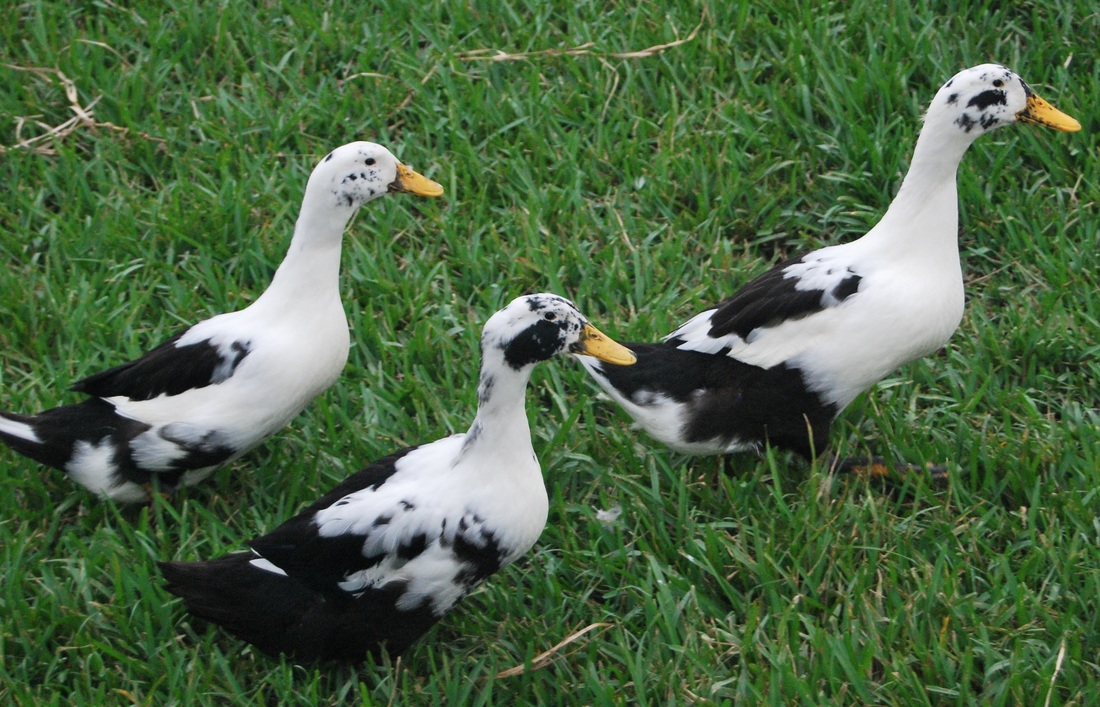
Ancona ducks
Picture
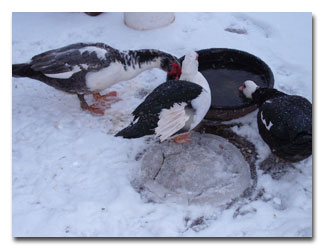
Muscovy ducks
Picture
Rouen ducks
0 Comments

The Birds at the Fat Ewe Farm

12/7/2013

0 Comments

 
PictureThe Ameruacanas prefer this coop. It is two livestock panels covered with plywood and a tarp over that. They are on perches a little higher than midway and seem just fine. It is actually warmer in there than outside due to the design and the number of birds, which emit enough body heat to raise the temperature slightly.
This is day 5 of extreme cold temperatures. The ducks have wads of poop frozen to their butts, because when they sleep, they poop and it freezes instantly to their feathers. Bathing in the icy water does not thaw the poop enough to remove it. If the wad grows too large, the ducks have to be submerged in warm water, brought from the house, to thaw the poop, or it could obstruct further poops. Gross! The chickens roost up higher, so they do not have that issue. The geese do, though, but not as bad as the ducks. Tomorrow the temperature is supposed to go all the way up to minus 25, whoo hoo. I will definitely have to bring warm water for the ducks several times to thaw those bottoms.

I noticed the fat tailed Karakul sheep, Dora, has been off by herself the last two days. I did not see anything amiss with her, but today there was some blood near her tail so I grabbed her and had a very close inspection. Her tail, that is the inside of it, was missing - gone!. The skin was flapping without the tail. It is not the way the dogs or coyotes normally would eat a tail and has me puzzled. I think the livestock guardian puppies must have eaten it somehow from the top to the inside, but why would she have allowed that to happen? Dora is a submissive sheep. So I moved Dora in with the Icelandics, away from the pups. I did not see any blood on the pups either, which is strange. I am miffed and so sorry for Dora. How painful that must have been, whatever it was, that ate her tail while she still had it on her. Now, what do I do with the remainder?

Oh, yes, and the rest of the animals are doing OK. The three Blue Faced Leiscester sheep have been treated for pneumonia, but one was still shivering today. I will have to call the vet again and see what I should expect from the very expensive drug he gave her. The other Dorset ram lamb that had diarrhea was treated at his farm prior to his arrival, but maybe he was missed. I have been in a dialogue with the previous breeder. If he kept good records, he might be able to tell me more. I will have to take a fecal culture to the vet and find out what his problem is and get it fixed so the other sheep do not contract it. He and his wife are confined to a small enclosure pen away from the sheep, but the llamas are on the other side. They do not have fence contact though.

And, the rest of the birds, the guineas and other chickens are just trying to stay warm, which is not easy when there is no let up in the frigid cold this week. Brrrrr.

Picture
This is the day house and night time shelter for the waterfowl. The chickens and guineas often come in and perch there. It is out of the wind and snow, but no warmer than outside. Some sunlight does filter in, so they are getting their vitamin D.
Picture
Those crazy ducks are ice covered after bathing in the frigid weather today. Then they choose the snow to sleep on, rather than their shelter, go figure. Duck down is warm, I guess.
Picture
Here is the chicken lounge, often occupied by the Bantams and the Muscovy ducks. The Bantams like the barrel boxes and sit there during the cold. They are in the light but not in the wind or snow.
Picture
Farmer Eileen with the new style hood and Balaclava. The mouth guard attaches with velcro. Once I was working, the hood slipped down and the opening was more of just a slit. This worked better than the tighter fitting balaclava which is wet with moisture from the breath and very uncomfortable.
0 Comments
<<Previous

    Categories

    All
    Airstream Land Yacht 1964
    Alpacas
    Alpine Goats
    Ameraucana Chickens
    American Buff Geese
    Ancona Ducks
    Angora Goats
    Angora Goats
    Angora Rabbits.
    Babydoll Southdown Sheep
    Babydoll Southdown Sheep
    Bed And Breakfast
    Berkshire Pigs
    Blue Faced Leicester Sheep
    Blue Swedish Ducks
    Boer Goats
    Border Collie
    Border Collie
    Bronze Turkey (Standard)
    Bronze Turkey Standard
    Canadian Horses
    Canadian Horses
    Cats
    Chickens
    Cotswold Sheep
    Crafts And Hobbies
    Cream Legbar Chickens
    Dorset Sheep
    Ducks
    Embden Geese
    E'st A Laine Merino Sheep
    Farm Life
    Farm Life
    Farm Store
    Finnsheep
    Flemish Giant Rabbit
    Flowers
    French Lop Rabbit
    Galloway Cattles
    Gardening
    Gotland Sheep
    Guinea Fowl
    Herbs
    Holstein Steer
    Icelandic Sheep
    Jacob Sheep
    Japanese Bantam Chickens
    Jersey Cow
    Kahaki Campbell Ducks
    Karakul Sheep
    Kiko Goats
    Kilo Highland Cows
    Light Sussex Chicken
    Livestock Guardian Dogs
    Livestock Guardian Dogs
    Maremma Sheepdogs
    Maremma Sheepdogs
    Meishan Pigs
    Miniature Nigerian Dwarf Goats
    Moose Hills Inn
    Muscovy Ducks
    Norwegian Red Dairy Cow
    Nubian Goats
    Nygora Goat
    Ossabaw Hogs
    Partidge Chantecler Chickens
    Pekin Ducks
    Permaculture
    Pied Guinea Fowl
    Polish/Ameraucana Bantam Cross Chickens
    Polled Dorset Sheep
    Potbelly Pigs
    Pygmy Goats
    Recipes
    Rigit Galloway Cows.
    Romanov Sheep
    Romney Sheep
    Rouen Ducks
    Saddleback Pomeranican Geese
    Saxony Ducks
    Sebastopol Geese
    Sheep And Goats
    Shetland Sheep
    Silver Spangled Hamburg Chicken
    Soap And Hand Made Cosmetics
    Standard Jack Donkey
    Sustainability
    Swiss Blackneck Goats
    The Llamas
    The Llamas
    Toulouse Geese
    Tunis Sheep
    White Chantecler Chickens
    White Danish Geese
    Wool

    Author

    Fluffy writes daily about the experiences on the farm and with the bed and breakfast patrons. 

    Archives

    October 2020
    September 2019
    June 2019
    March 2019
    January 2019
    November 2018
    December 2017
    November 2017
    October 2017
    September 2017
    August 2017
    July 2017
    June 2017
    May 2017
    April 2017
    March 2017
    February 2017
    January 2017
    December 2016
    November 2016
    October 2016
    September 2016
    August 2016
    July 2016
    June 2016
    May 2016
    April 2016
    March 2016
    February 2016
    January 2016
    December 2015
    November 2015
    October 2015
    September 2015
    August 2015
    July 2015
    June 2015
    May 2015
    April 2015
    March 2015
    February 2015
    January 2015
    December 2014
    November 2014
    October 2014
    September 2014
    August 2014
    July 2014
    June 2014
    May 2014
    April 2014
    March 2014
    February 2014
    January 2014
    December 2013
    November 2013
    October 2013
    September 2013
    August 2013
    July 2013
    June 2013
    May 2013
    April 2013
    March 2013
    February 2013
    January 2013

    view old blog site

    RSS Feed

Powered by Create your own unique website with customizable templates.